
Zermatt Five Lakes Walk: Complete Hiking Guide
Today we are continuing our adventures through Switzerland with a complete guide to one of the most famous hikes in the canton of Valais: the Zermatt Five Lakes Walk. Just don’t confuse it with the Five Lakes Hike in Pizol, on the other side of Switzerland, which we covered in another post.
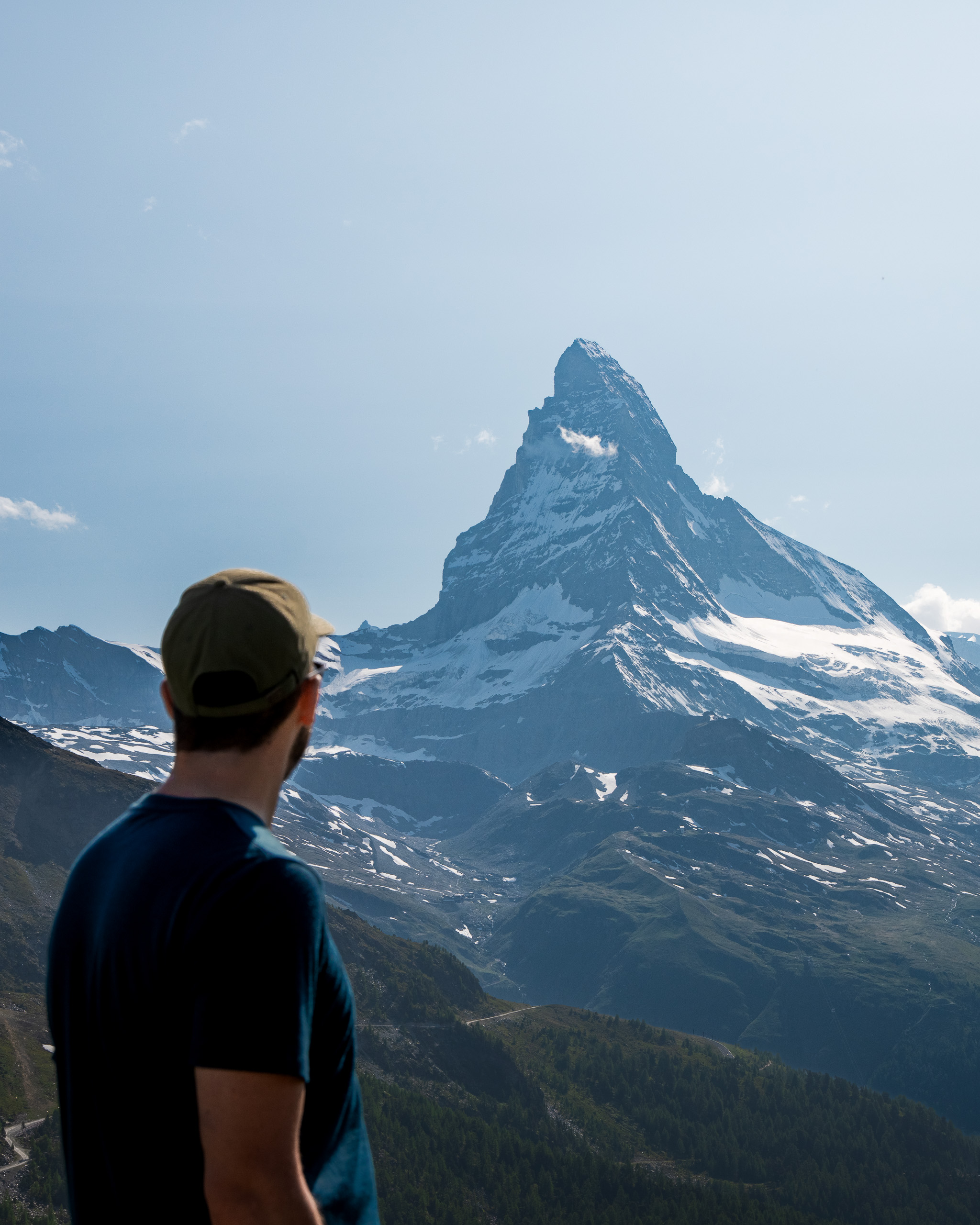
You have probably seen hundreds of pictures of Zermatt. Both the village and the mountains around it look as if they were made for a postcard, with the unmistakable Matterhorn rising above the valley. For many years, this iconic mountain was also the one pictured on Toblerone packaging.
But there is much more to Zermatt than its most famous peak. We tell you more about the area in our guide to spending two days in Zermatt.
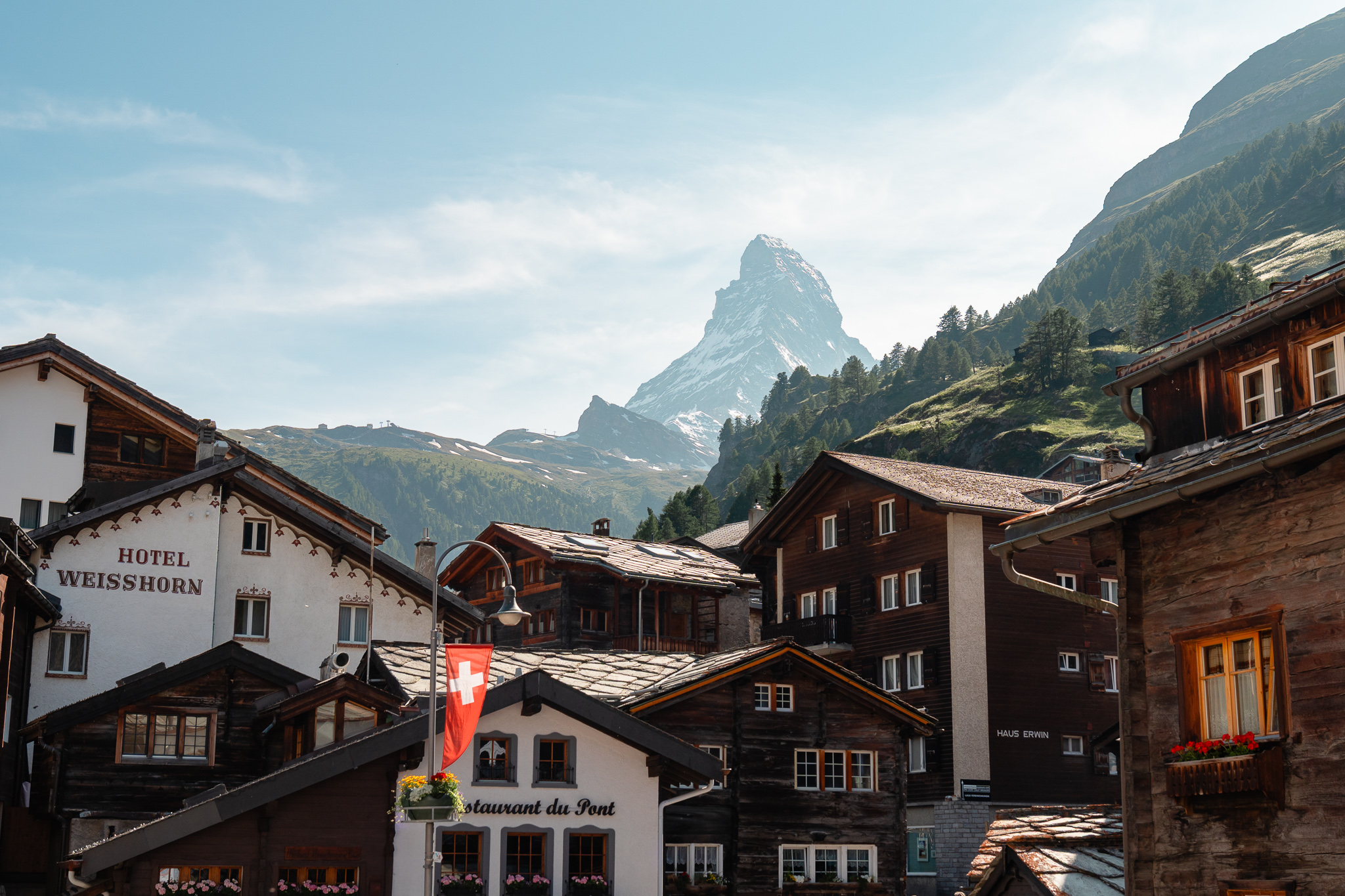
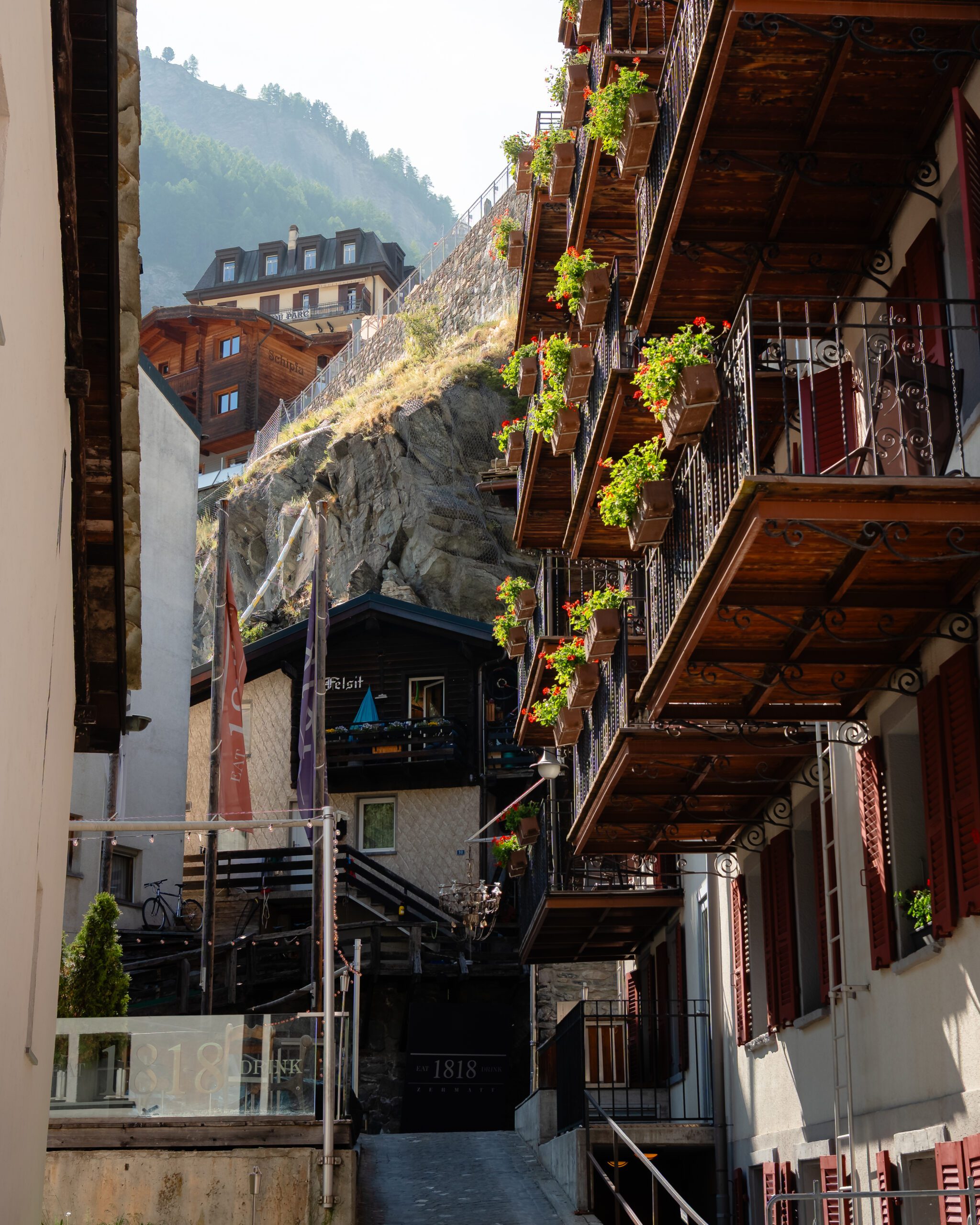
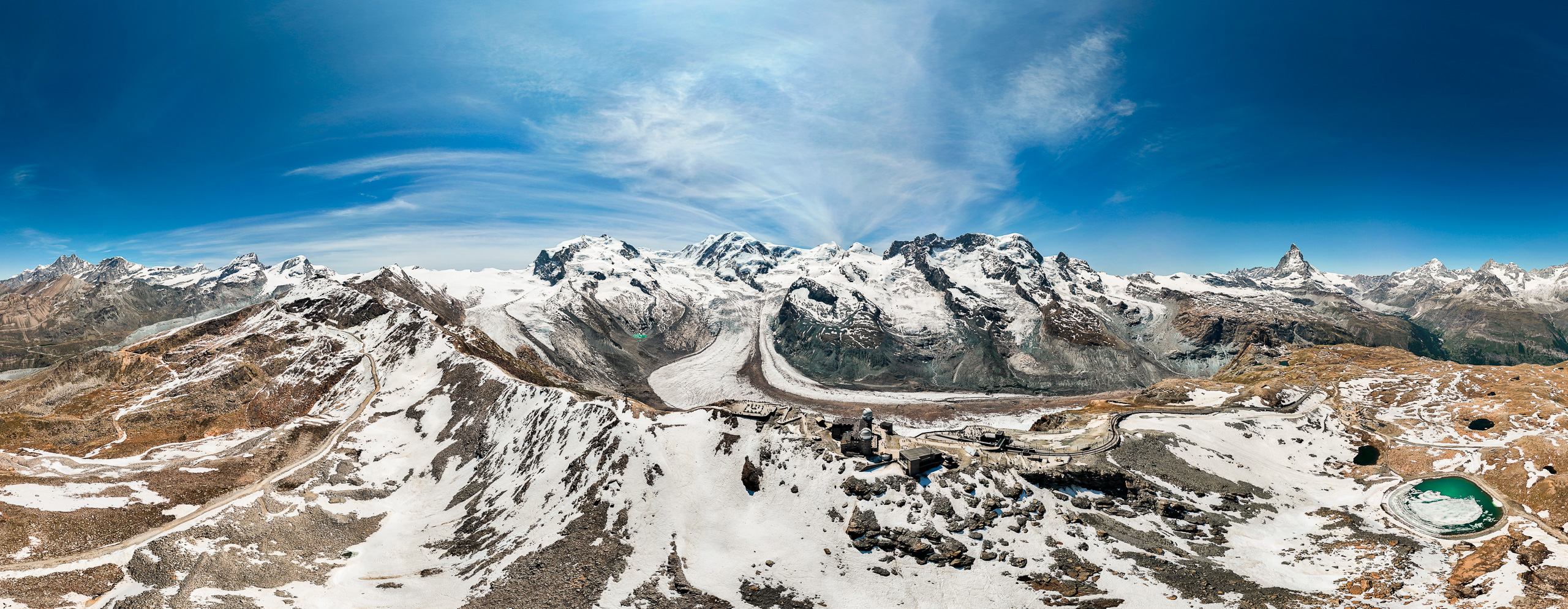
The hike we are covering today links five Alpine lakes and offers incredible views across the mountains and the Zermatt valley. The trail crosses Alpine meadows filled with flowers, passes mountain lakes and gives you views not only of the Matterhorn, but also of the surrounding peaks, including the huge Monte Rosa massif and Dufourspitze, the highest summit in Switzerland.
During our two day trip to Zermatt, we decided to spend one day visiting Gornergrat and the other hiking the Zermatt Five Lakes Walk. It turned out to be the perfect combination.
Below, we explain how to plan the Zermatt Five Lakes Walk step by step, including how to get there, what to expect from each lake, the difference between the official trail and the route we followed, and some tips from our own experience.
How to get to the Zermatt Five Lakes Walk
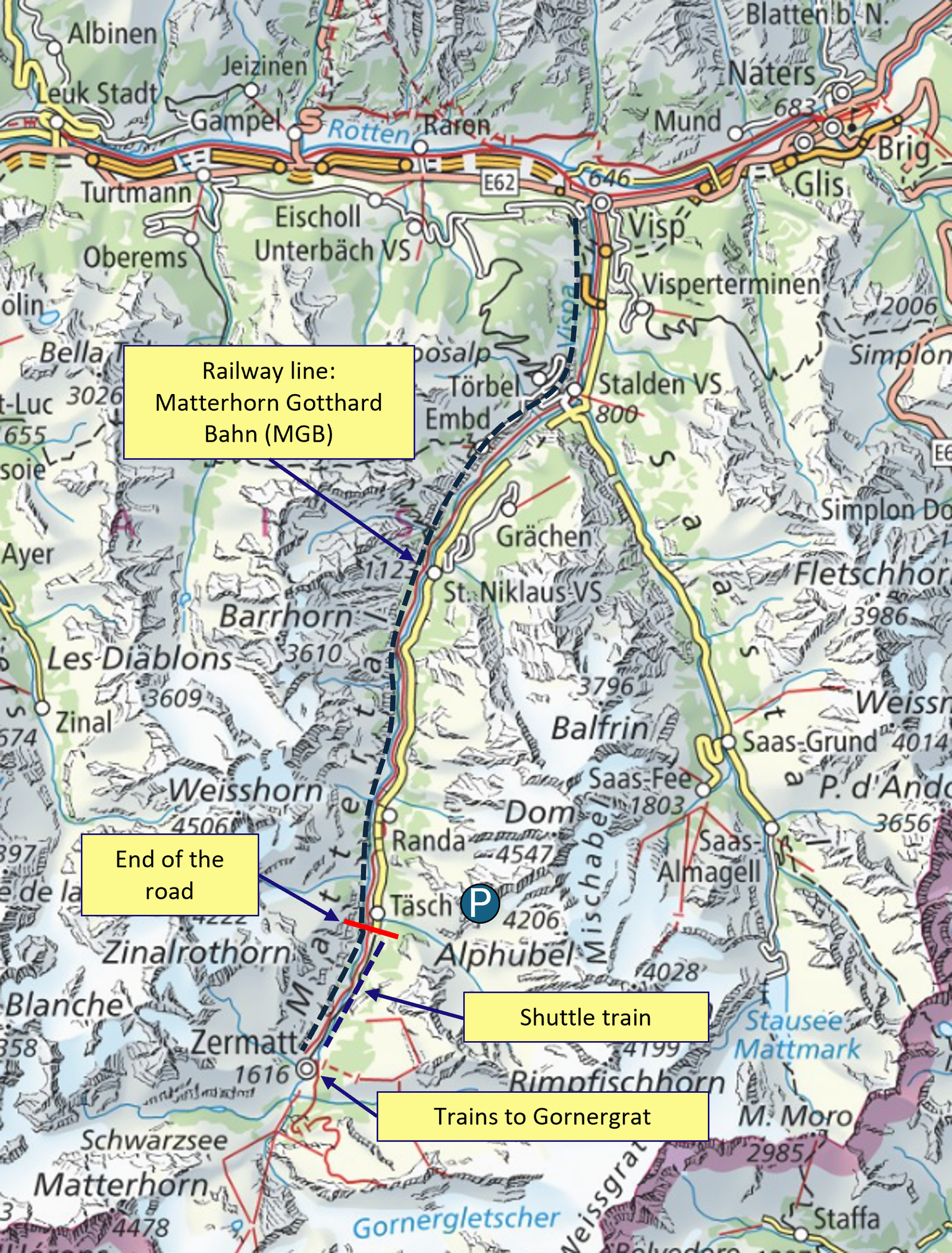
First, you need to get to Zermatt, which is a car free village. If you are travelling by car, you can leave it in the nearby village of Täsch and take the shuttle train to Zermatt. Trains normally run every 20 minutes and the journey takes around 12 minutes.
💡Tip: Depending on the time of year, Zermatt can get very busy, particularly around the trains and mountain lifts. We recommend starting early so you have plenty of time to enjoy the hike.
Once in Zermatt, head to the Sunnegga valley station in the village. From here, an underground funicular takes you up to Sunnegga at 2,288 metres.
This is where we started our hike. The more common option, however, is to continue from Sunnegga to Blauherd at 2,571 metres and start the official Five Lakes Walk from there.
The official trail goes from Blauherd down towards Sunnegga. We did essentially the same Five Lakes route in the opposite direction and then continued hiking all the way back to Zermatt afterwards. We explain both options in detail below.
Prices
We bought our tickets directly at the station. Because we wanted to hike all the way back to Zermatt afterwards, we only bought a one way ticket to Sunnegga instead of travelling all the way to Blauherd.
Prices depend on the time of year. During the 2026 hiking season, a one way ticket from Zermatt to Sunnegga costs CHF 19 per adult in May, June, September and October, and CHF 21 in July and August. A one way ticket from Zermatt to Blauherd costs CHF 35 or CHF 39 respectively.
If you prefer to do the official route from Blauherd to Sunnegga, there is also a Five Lakes Walk combination ticket that includes the journey from Zermatt to Blauherd and the return from Sunnegga to Zermatt. In 2026, this costs CHF 48 outside the peak summer months and CHF 53 in July and August.
Children under 9 travel free, while children from 9 to 15 years receive a 50% discount. Holders of the Swiss Half Fare Card and Swiss Travel Pass can also receive a 50% discount on eligible fares.
Prices and operating dates can change, so we recommend checking the official Zermatt Bergbahnen website before your hike.
Can you hike up from Zermatt instead? Yes. There are trails connecting the village with Sunnegga and Blauherd, but reaching Blauherd from Zermatt means gaining roughly 900 metres of elevation and can take more than three hours.
In our opinion, it makes more sense to save your energy for the Five Lakes Walk itself and, if you still feel like adding more hiking, walk back down to Zermatt afterwards.
💡Tip: If you are planning several mountain excursions during a trip around Switzerland, such as Mount Pilatus from Lucerne, Jungfraujoch or Gornergrat, it may be worth looking into a Swiss Travel Pass or the Swiss Half Fare Card.
The five lakes of Zermatt
The route connects five Alpine lakes, and they are surprisingly different from one another. We have to admit that a couple of them impressed us more than others. Some are incredibly photogenic, while others are better places to stop, relax or even go for a swim.
One of the highlights of the hike is the possibility of seeing the Matterhorn reflected in the water. According to Zermatt Tourism, the reflection can be seen from Stellisee, Grindjisee and Leisee when the weather and wind conditions are right.
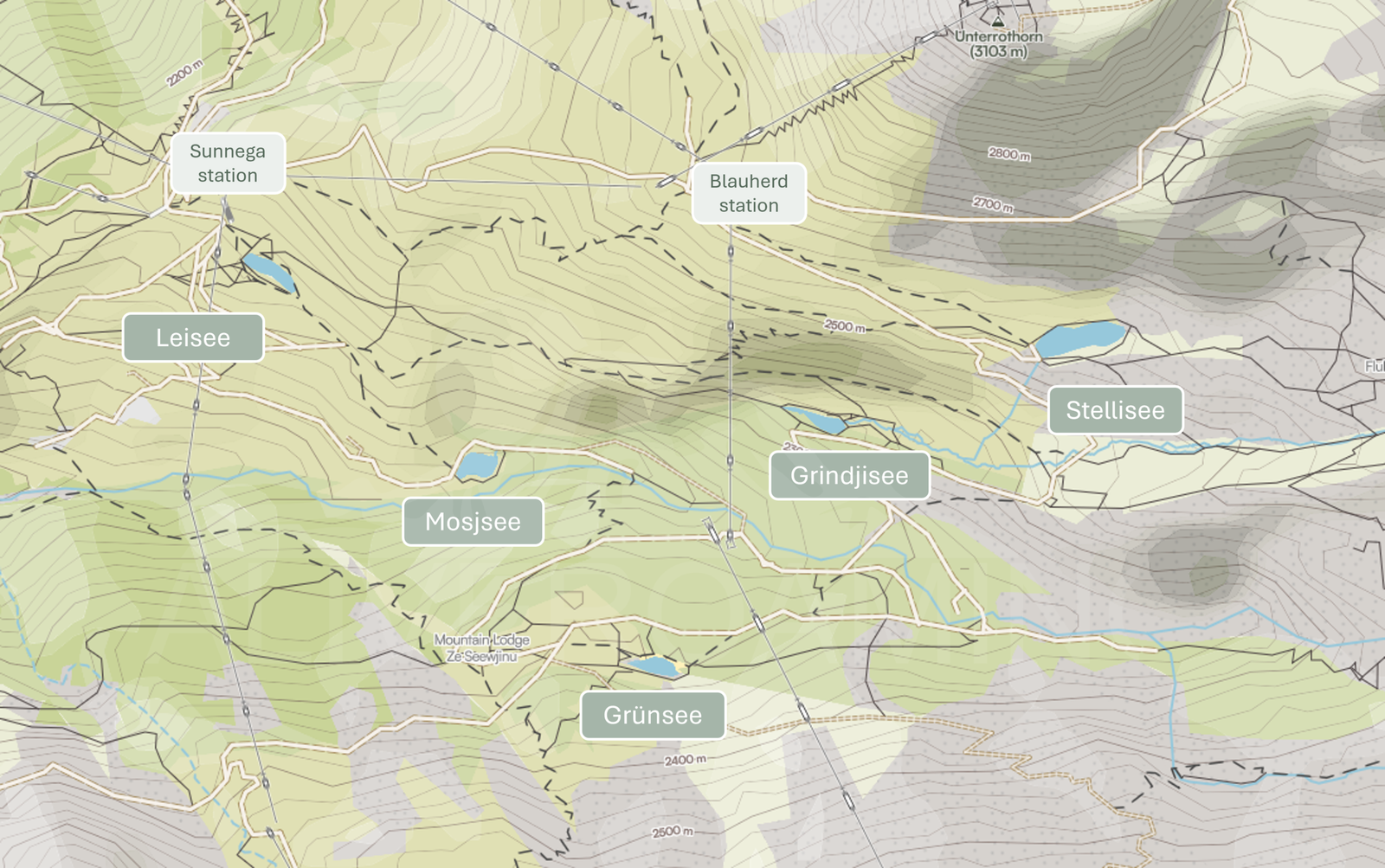
Here is what you can expect from each one:
Leisee
Leisee was the first lake on our route because we started from Sunnegga. If you hike the official trail from Blauherd, it will be the last of the five.
It is the most developed lake on the route and is located very close to Sunnegga. In summer, the area is particularly popular with families and has grassy areas, benches, barbecue spots and a small playground. You can also swim here, making it a great place to spend some time if you are travelling with children.
It is also one of the three lakes where you may be able to see the Matterhorn reflected in the water on a calm, clear day.
Grindjisee
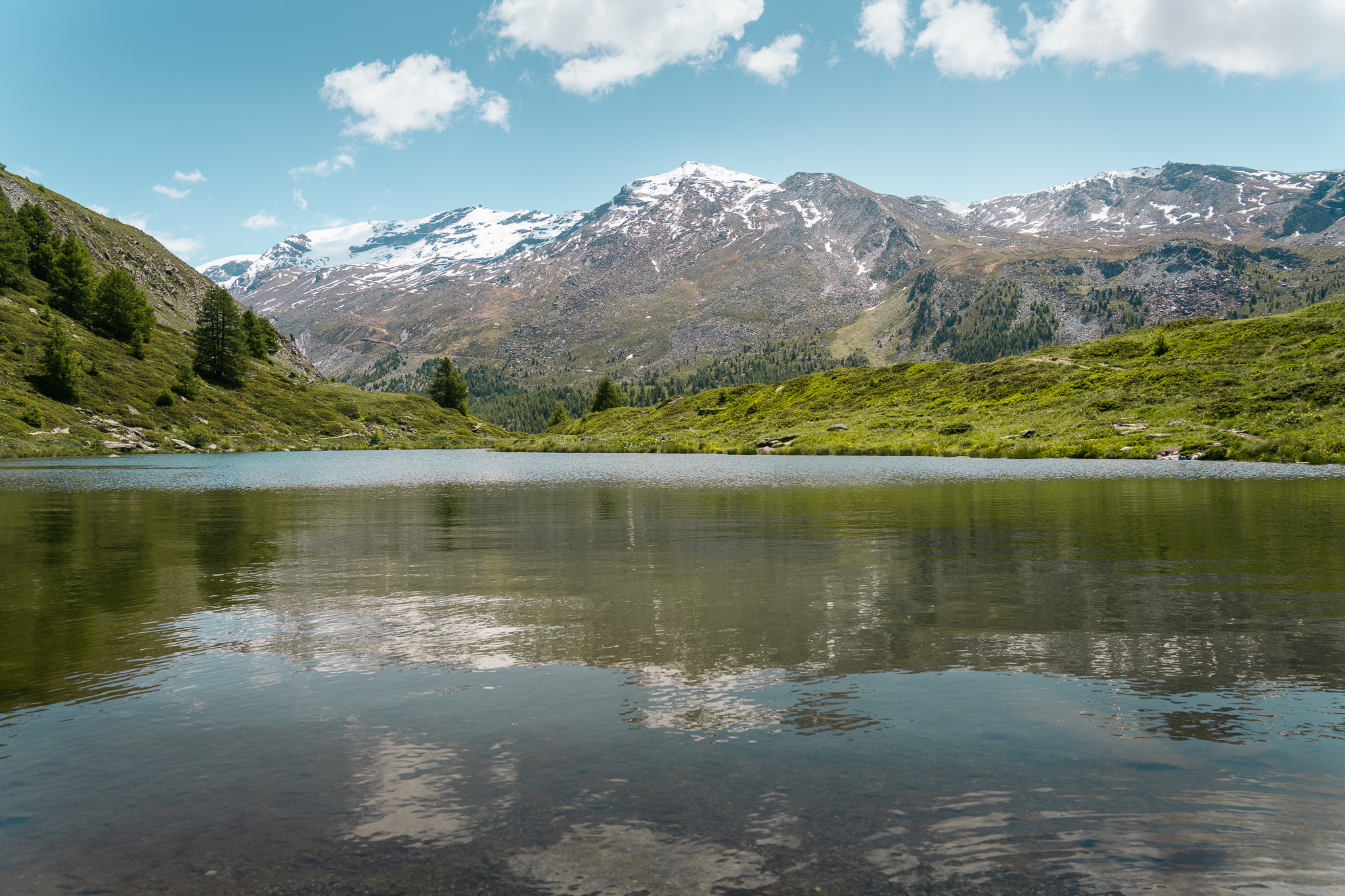
Grindjisee is smaller and surrounded by much more vegetation, which is one of the reasons we liked it so much. It felt wilder, quieter and more secluded than some of the other lakes along the route.
Rare Alpine flowers grow around this area and, under the right conditions, Grindjisee is another good place to look for a reflection of the Matterhorn.
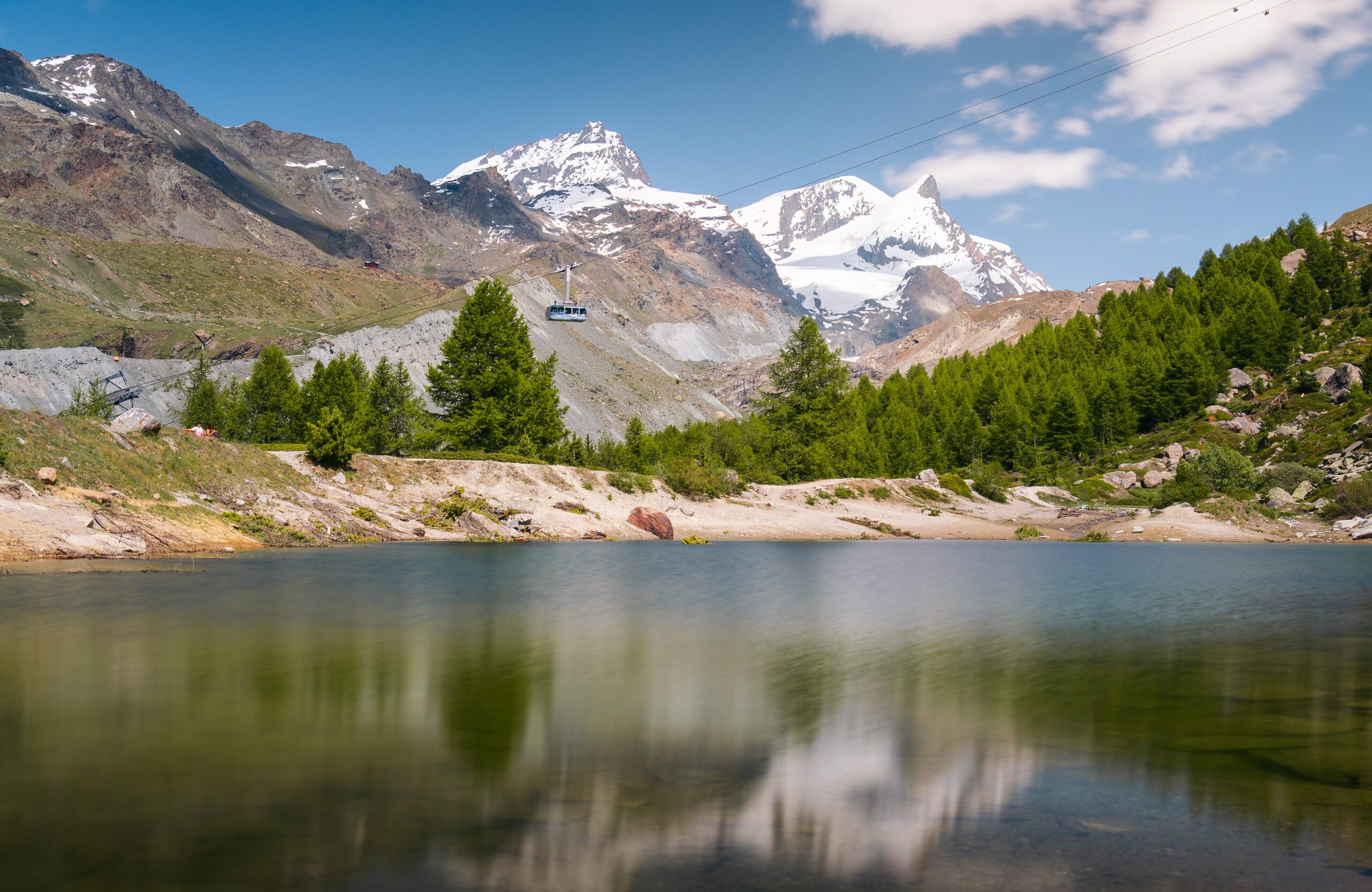
Grünsee
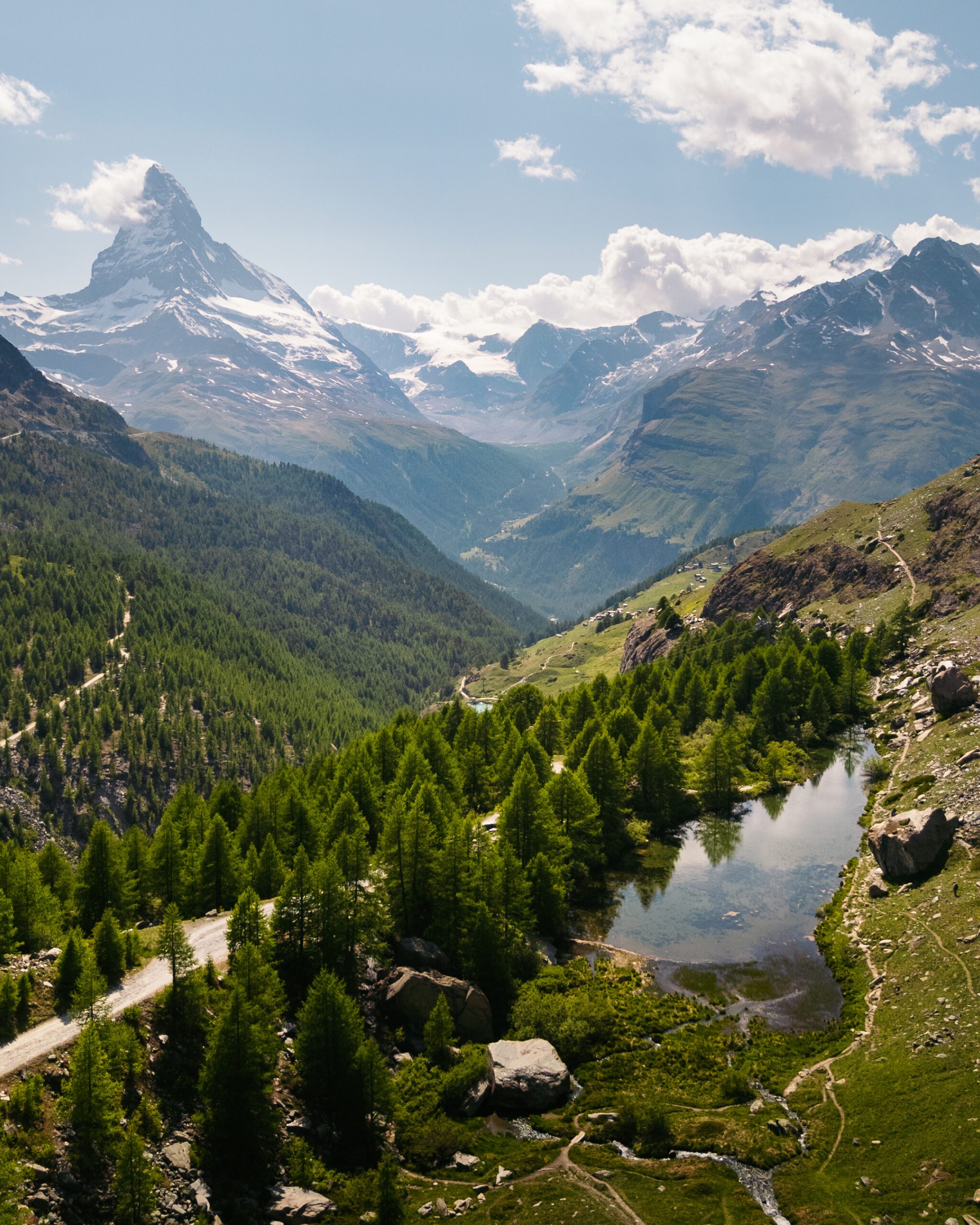
If you know a little German, the name already gives you a clue. Grün means green, and the lake really does have a distinctive greenish colour.
The landscape here feels different from the other lakes and the surroundings are generally quieter. When we visited, however, we happened to find a large group of people enjoying a swim.
Swimming is allowed at Grünsee, so it is a good place to take off your hiking boots for a while and cool your feet in the water.
Moosjisee
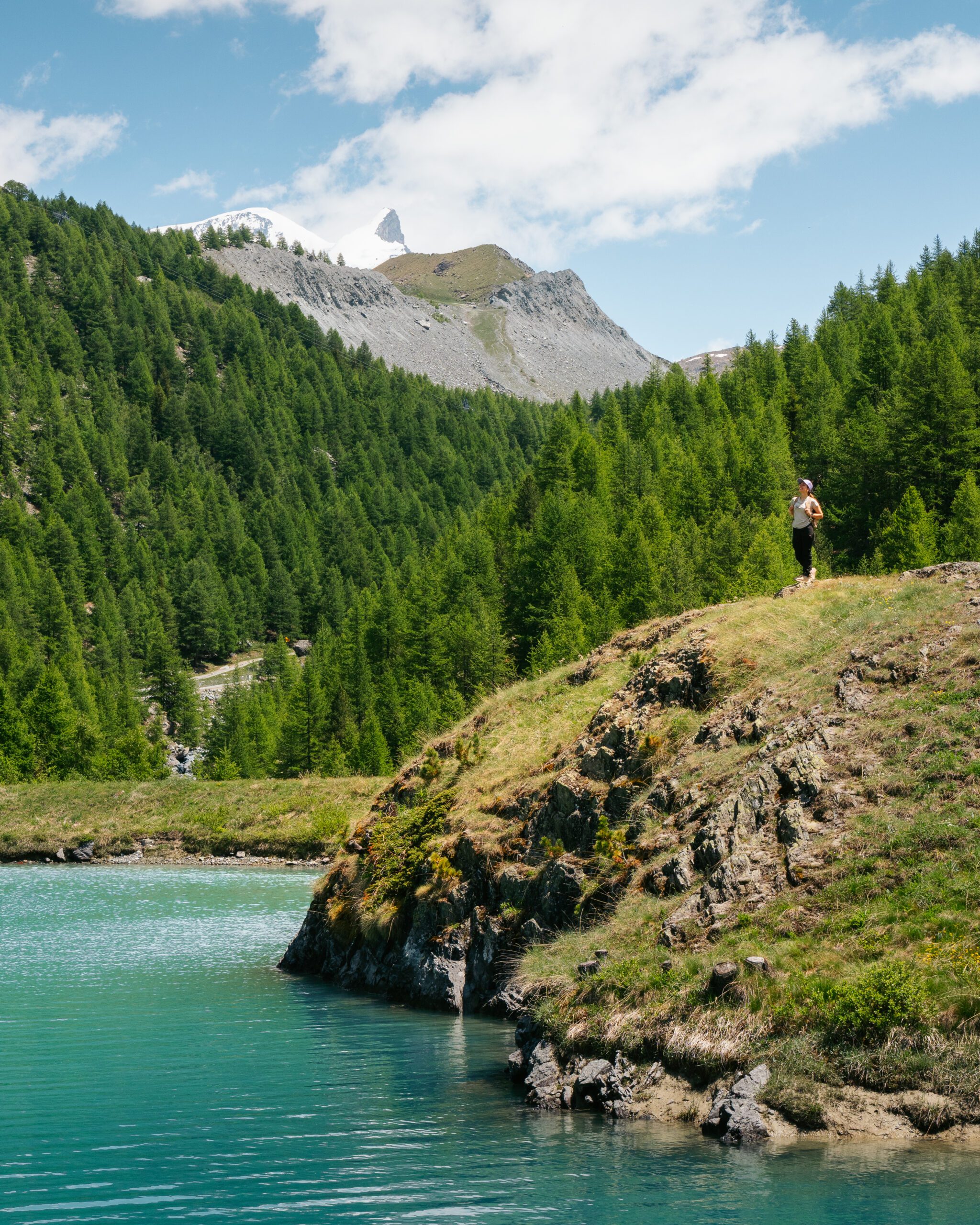
Moosjisee is immediately recognisable thanks to its striking milky turquoise colour. The colour comes from sediment rich glacial meltwater, including water from the Findel Glacier.
Unlike the other lakes on the route, Moosjisee is an artificial reservoir. Its water is used to generate electricity and for snowmaking, which explains the infrastructure around the lake.
We have to admit that this was probably the lake that impressed us the least. The colour is beautiful, but the setting feels less natural than the other four lakes. Swimming is also strictly prohibited here for safety reasons.
Stellisee
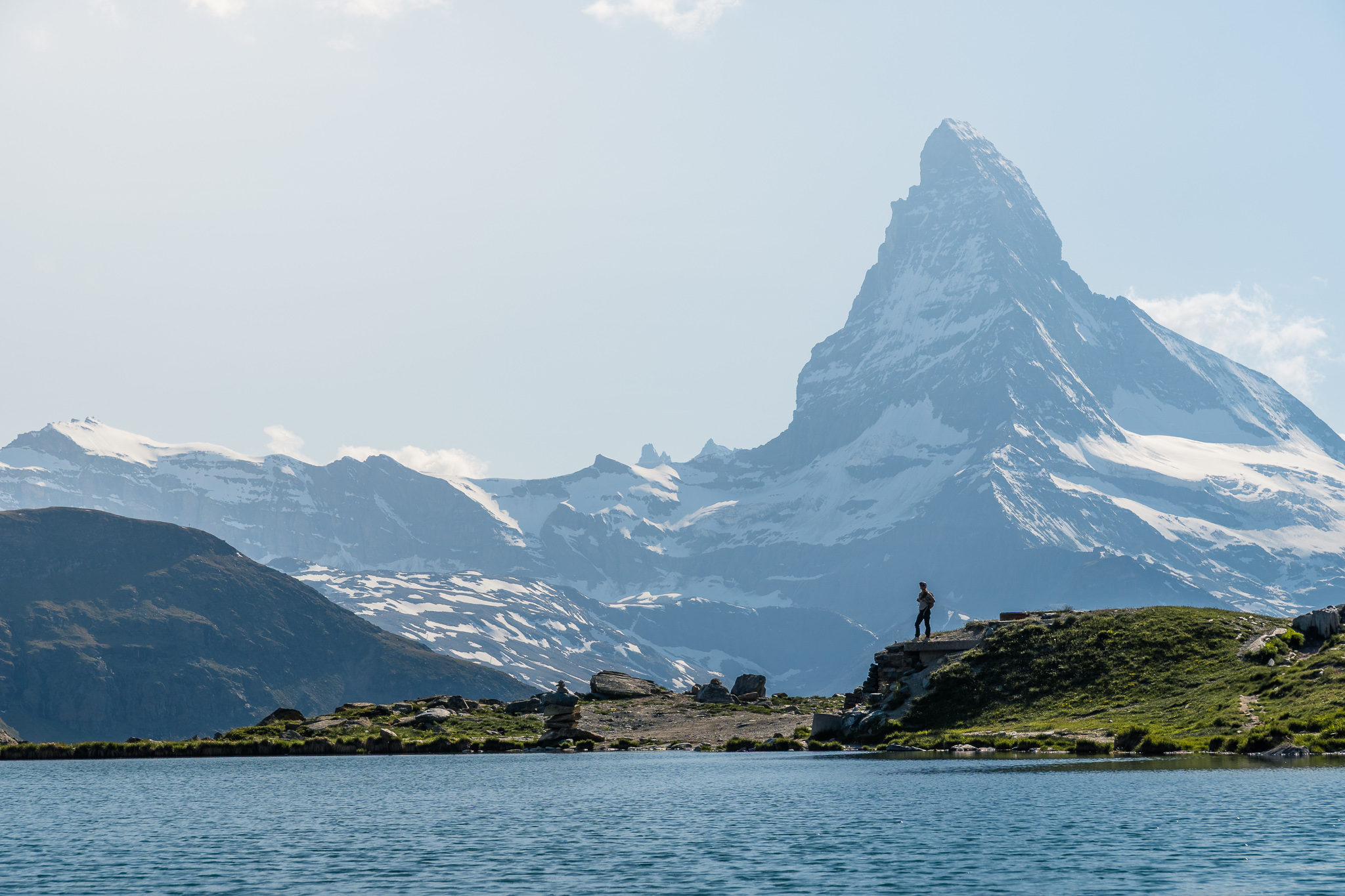
Stellisee is probably the most famous lake on the route and certainly one of the most photogenic. On a clear, calm day, the Matterhorn can be perfectly reflected in the water, creating one of the classic views of Zermatt.
The lake is around a 20 minute walk from Blauherd, so even visitors who do not want to complete the entire Five Lakes Walk can reach it relatively easily.
If photography is one of your main reasons for doing this hike, Stellisee is probably the lake where you will want to spend the most time. Calm conditions are important if you want to capture the classic Matterhorn reflection.
Official Zermatt Five Lakes Walk vs our route
The official Zermatt Five Lakes Walk starts at Blauherd and finishes at Sunnegga. It follows the lakes in this order: Stellisee, Grindjisee, Grünsee, Moosjisee and Leisee.
This is the easiest direction because most of the elevation change is downhill. According to Zermatt Tourism, the official route is classified as a moderate T2 trail and takes around 3 hours 30 minutes without long stops.
- Official route: Blauherd to Sunnegga
- Distance: 11.3 km
- Estimated time: 3 h 30 min
- Ascent: 265 m
- Descent: 542 m
- Difficulty: Moderate, T2
- Highest point: 2,617 m
- Lowest point: 2,130 m
- Recommended direction: Blauherd to Sunnegga
Zermatt Tourism also lists the hike as suitable for children from around six years old, although this obviously depends on the child’s hiking experience and the conditions on the day.
We decided to hike the Five Lakes Walk in the opposite direction. Instead of taking the lifts all the way to Blauherd, we got off at Sunnegga and walked towards the five lakes before finishing the main route at Blauherd.
This makes the hike more demanding because you are walking predominantly uphill instead of downhill. The official website estimates around 3 hours 50 minutes for the Five Lakes Walk in this direction.
Our GPS track measured almost the same distance, with slightly different elevation figures. We liked this option because we saved some money on the lift ticket and could then turn the excursion into a much longer day in the mountains by walking all the way back down to Zermatt afterwards.
Our Five Lakes route from Sunnegga to Blauherd
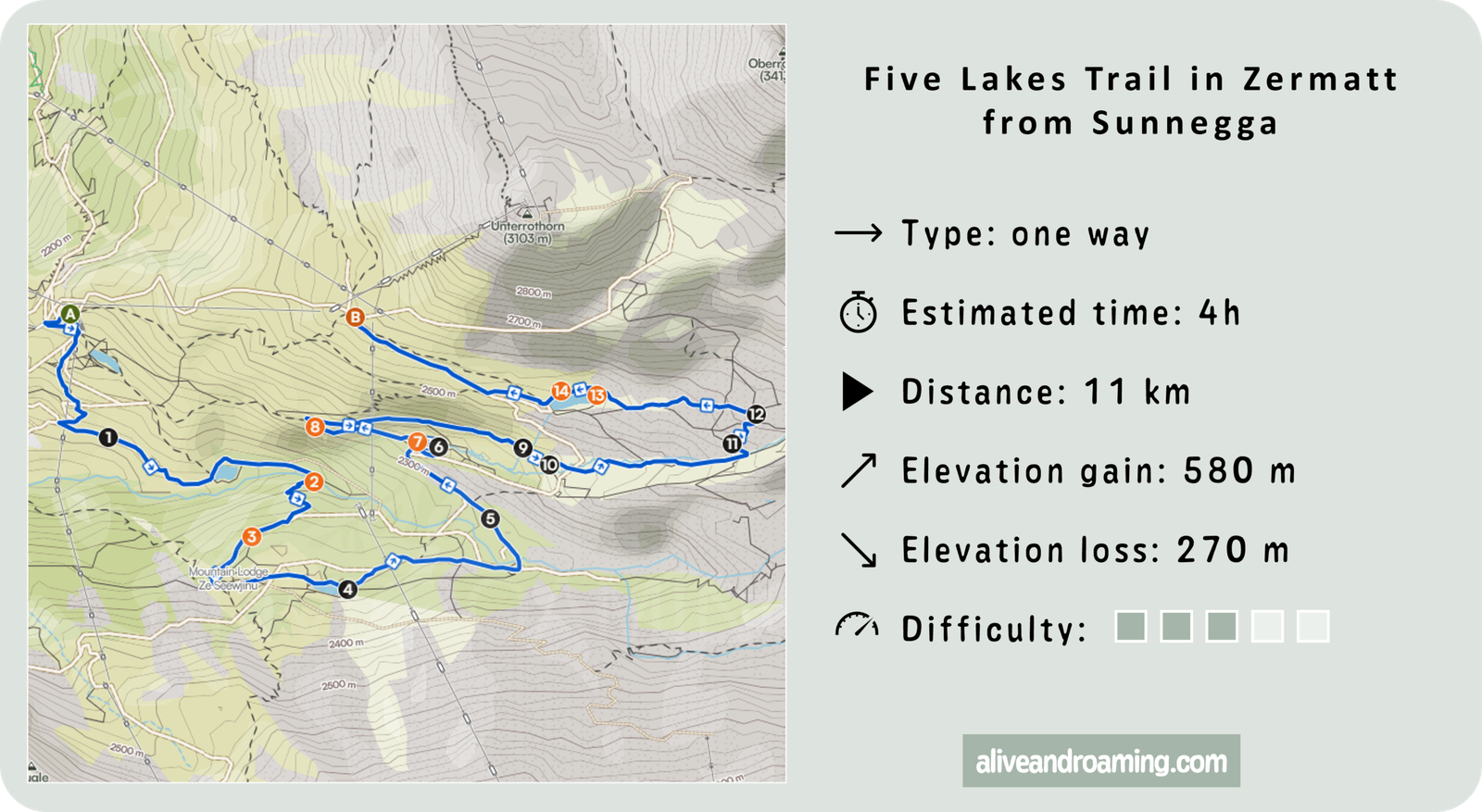
- Route: Sunnegga to Blauherd via the five lakes
- Type: One way
- Distance: 11 km
- Estimated time: 4 hours
- Ascent: 580 m
- Descent: 270 m
After taking the underground funicular from Zermatt to Sunnegga, we started walking towards our first lake, Leisee. It is very close to the station and only requires a short descent.
As we mentioned earlier, Leisee is the most developed of the five lakes. Around the shore you will find picnic areas, a playground and barbecue facilities. If you are hiking with children, it is a fantastic place to spend some time.
We were looking for something a little wilder, though, so after a short stop we continued.
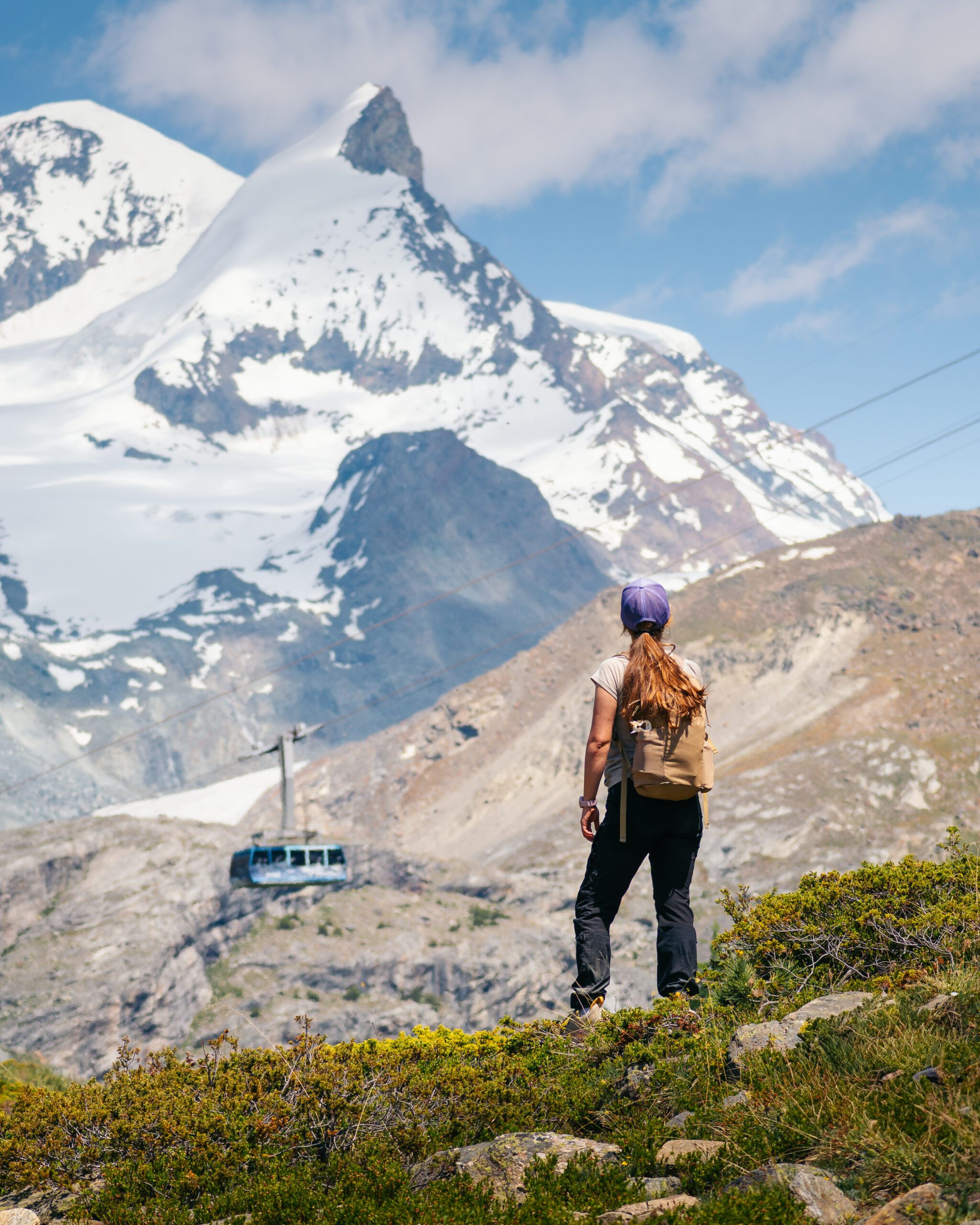
From Leisee, we continued towards Moosjisee. The route is straightforward, although if you have enough time you can make a small detour through the traditional hamlets around Findeln.
The old wooden buildings give you a glimpse of what this mountain landscape looked like long before Zermatt became an international tourist destination.
From Moosjisee, the route starts to require a little more effort. Continue until you reach a bridge crossing the Findelbach and then follow the path uphill.
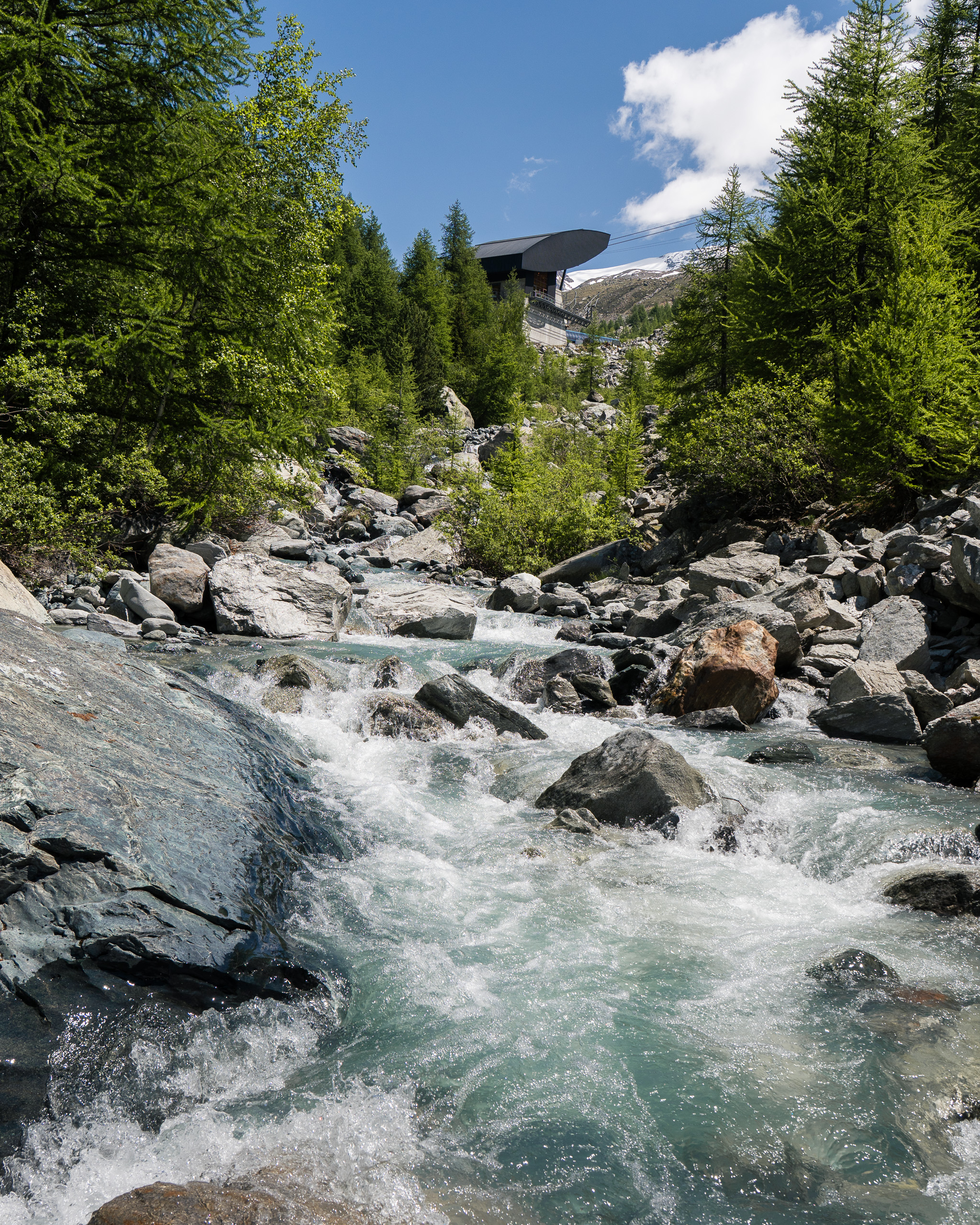
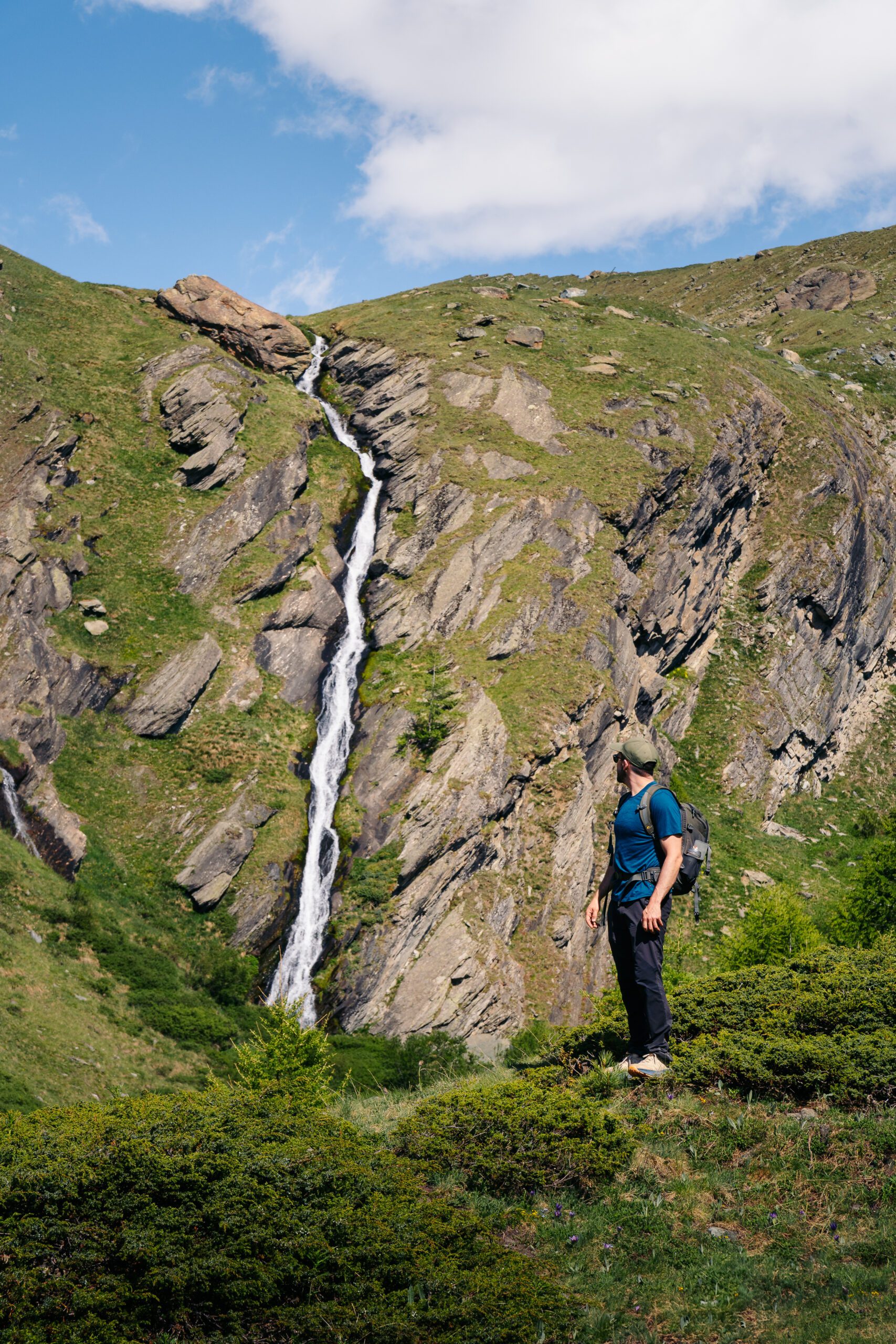
From here, the route continues through the mountain landscape towards Grünsee, Grindjisee and finally Stellisee. Because we were hiking in the opposite direction to the official route, this section involved considerably more climbing than it would if you started at Blauherd.
Near Grünsee you will find the Grünsee Mountain Lodge. When we visited, it was still known as Mountain Lodge Ze Seewjinu. The lodge changed its name in 2025, but the old name is interesting because Ze Seewjinu comes from the local Valais dialect and roughly means “to the lakes”.
After living in Switzerland for four years, we became quite used to hearing completely different Swiss German dialects from one valley to another, but this was still a new one for us.
The lodge was closed when we visited, but the climb was still worth it because the views of the mountains surrounding the Matterhorn were spectacular.
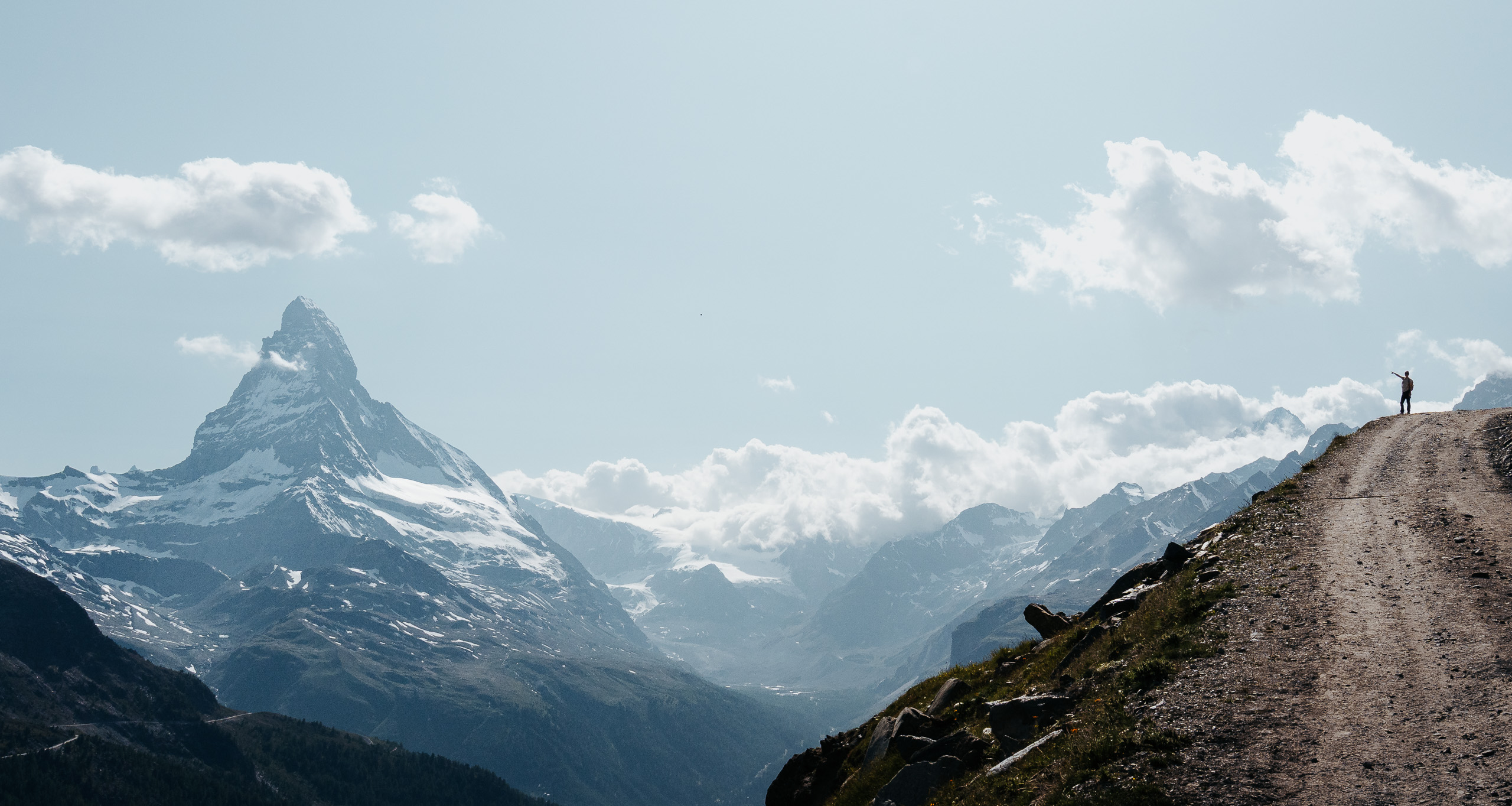
Eventually we reached the Blauherd area. At this point, most hikers doing the official route would have started their day rather than finished the Five Lakes section.
Instead of taking the lift back down, we decided to keep walking towards Zermatt.
Hiking from Blauherd back to Zermatt via Sunnegga
If you still have enough energy after completing the Five Lakes Walk, you can skip the lift and continue hiking all the way back down to Zermatt. This is what we did, and it turned the excursion into a much longer full day hike.
For part of the descent from Blauherd towards Sunnegga, we followed the Flower Trail. The official Flower Trail runs from Blauherd to Sunnegga via Tufteren and is known for its Alpine flowers and beautiful views of the surrounding mountains.
It is worth pointing out that the official Flower Trail finishes at Sunnegga. We continued hiking beyond Sunnegga and descended all the way to the village of Zermatt.
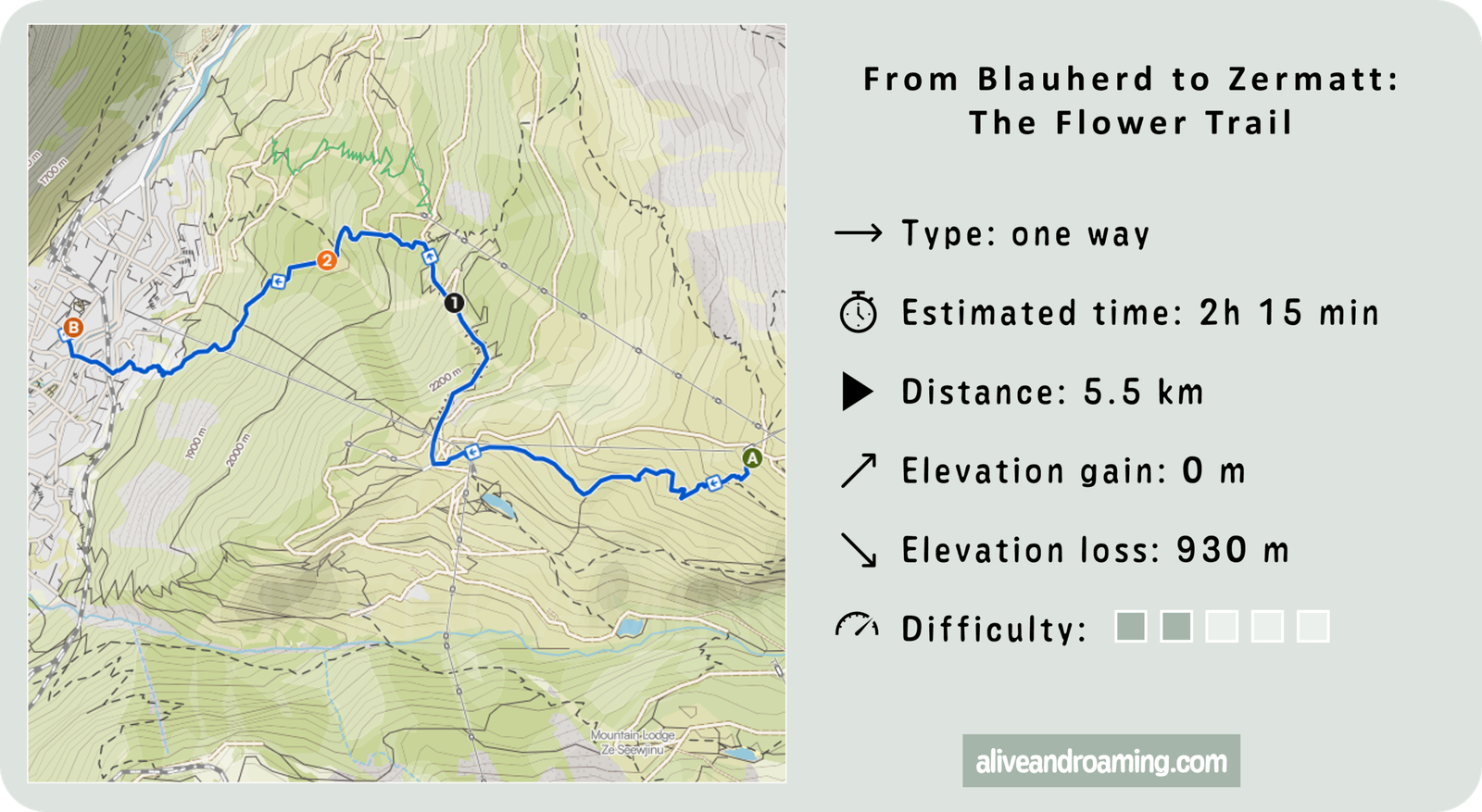
- Our route: Blauherd to Zermatt via Sunnegga
- Type: One way
- Distance: 5.5 km
- Estimated time: 2 h 15 min
- Ascent: 0 m
- Descent: 930 m
For comparison, the official Flower Trail itself runs only from Blauherd to Sunnegga.
- Official Flower Trail: Blauherd to Sunnegga via Tufteren
- Distance: 4.6 km
- Estimated time: 1 h 20 min
- Ascent: 76 m
- Descent: 363 m
- Difficulty: Moderate, T2
Depending on the time of year, you will find different Alpine flowers along this section of the mountain. Edelweiss and gentian are among the species that can flower here, together with many other Alpine plants adapted to growing at high elevations.
Later in the day you may also have a better chance of spotting wildlife. We walked down towards the evening and saw several marmots, a chamois and a small deer along the way.
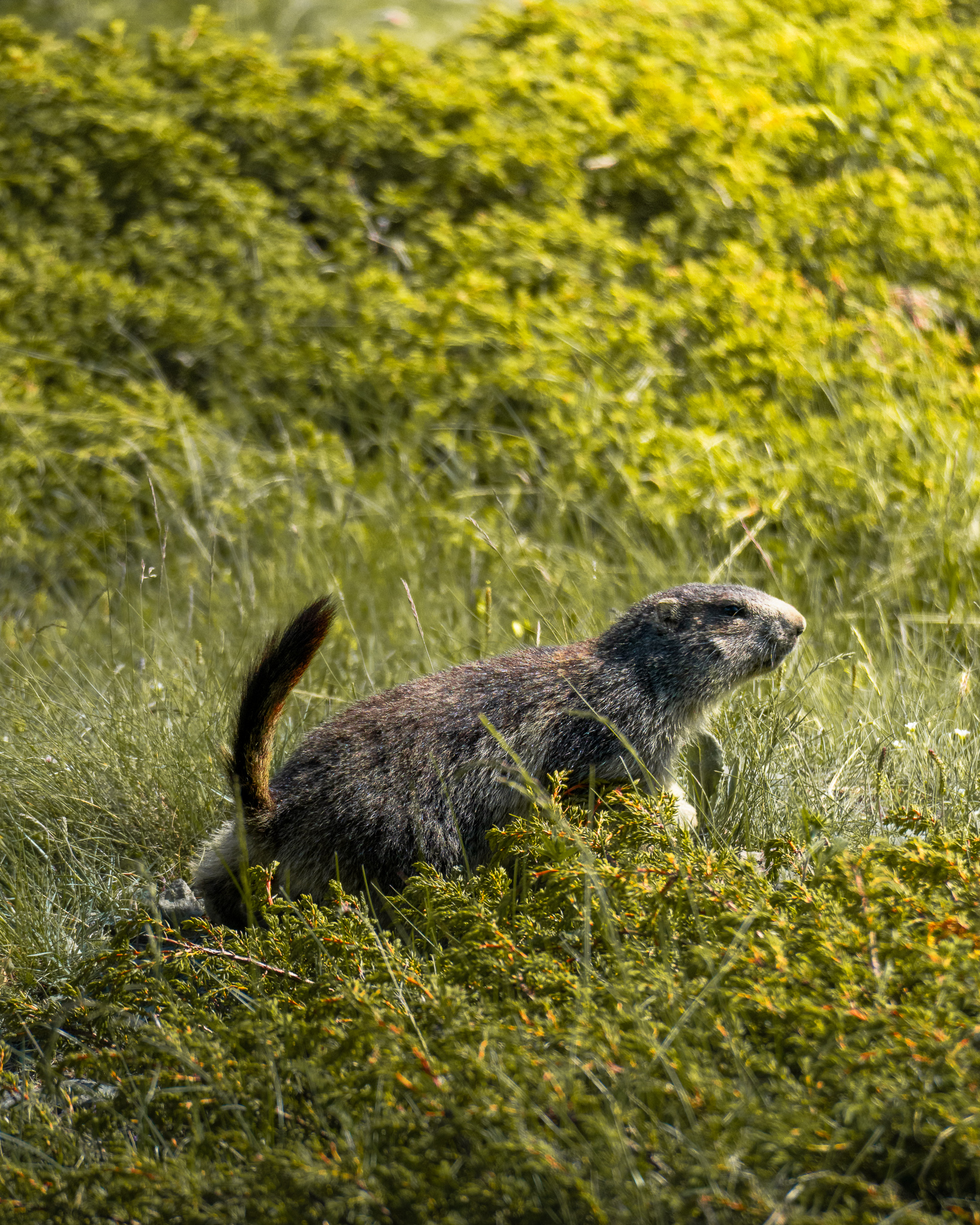
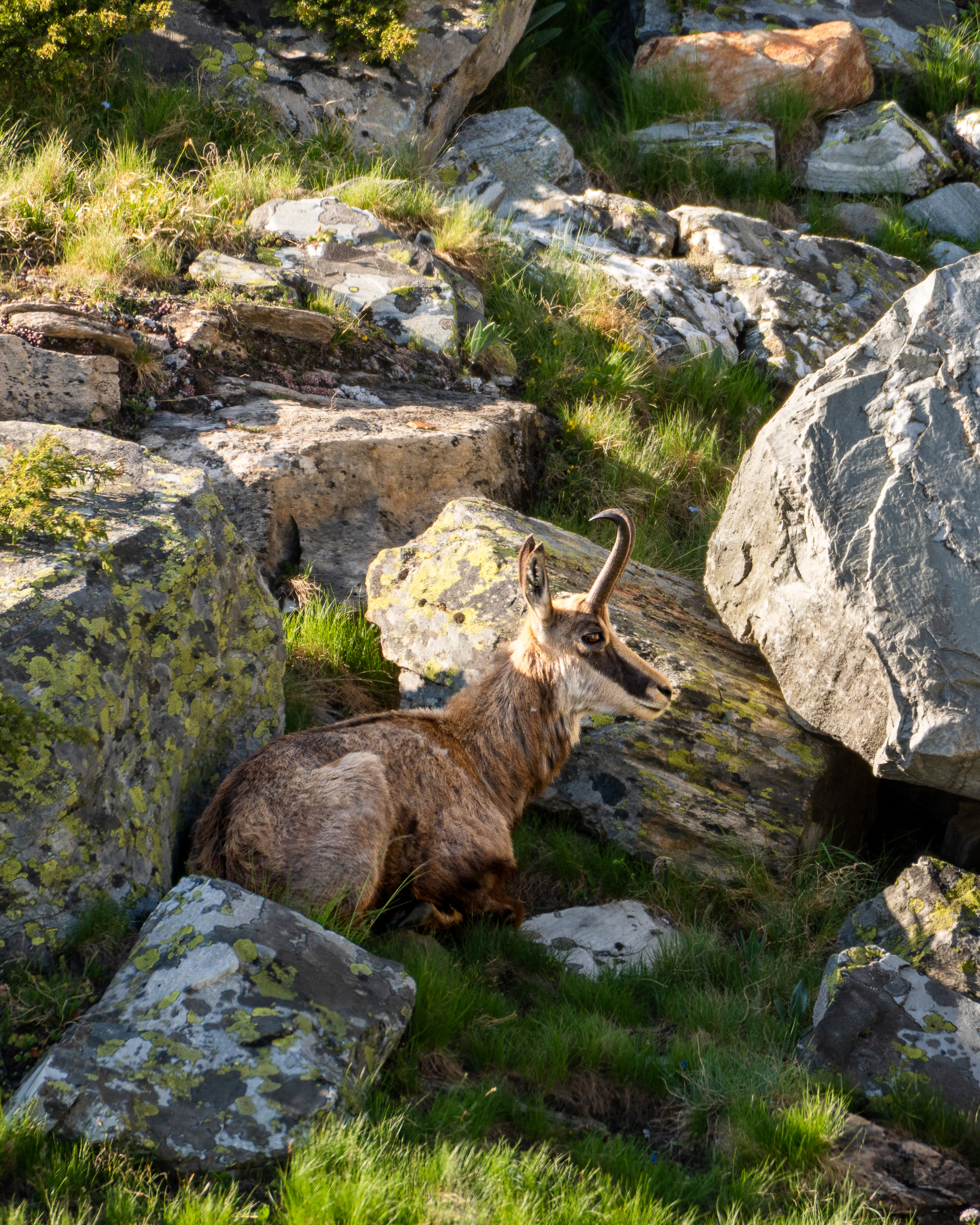
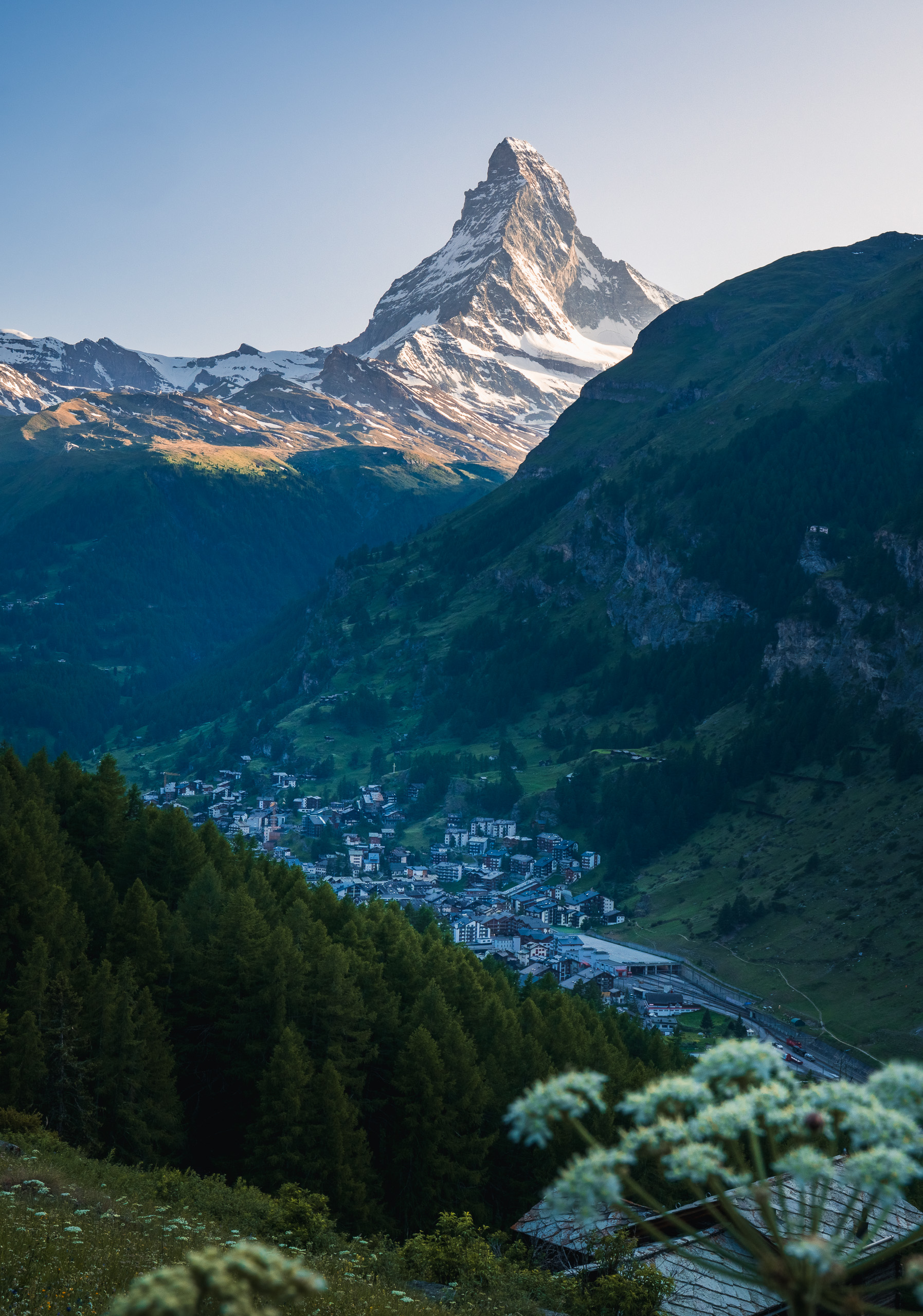
The descent towards Zermatt was one of the nicest surprises of the day. The trail became much quieter, we passed traditional mountain houses and the Matterhorn kept appearing between the slopes as we lost elevation.
By continuing all the way to Zermatt instead of taking the lift from Sunnegga, we added another 930 metres of descent to the day. It makes for a considerably longer hike, but if your legs are still feeling good, we think it is a beautiful way to finish the route.
Best time to hike the Zermatt Five Lakes Walk
The Zermatt Five Lakes Walk is primarily a summer and early autumn hike. The exact season depends on snow conditions and, importantly, on the operating schedule of the lifts connecting Zermatt, Sunnegga and Blauherd.
Summer gives you the best chance of seeing Alpine flowers along the route, while early autumn can offer quieter trails and beautiful mountain scenery. Whatever month you choose, always check the trail conditions and lift schedule shortly before your visit.
If seeing the Matterhorn reflected in the lakes is important to you, an early start can also be a good idea. The reflections are at their best when the water is calm, so wind conditions can make as much difference as the time of day.
What to bring on the Zermatt Five Lakes Walk
The Five Lakes Walk is relatively straightforward, particularly if you follow the official route from Blauherd to Sunnegga and use the mountain lifts for both ends of the hike.
Our version is more demanding because it reverses the main route and adds the long descent to Zermatt, so you should take the additional distance and elevation into account before choosing this option.
Being comfortable and properly equipped can make a huge difference to your day in the mountains. If you are new to hiking, you can also read our 20 basic hiking tips for beginners.
One thing we have learned after years of hiking is that mountain weather can change very quickly, especially at higher elevations. Even in summer, we recommend dressing in layers and carrying an outer layer that provides protection from wind and rain.
For footwear, hiking shoes or boots with good grip are the best option. This becomes particularly important on descents, especially if parts of the trail are steep, loose or wet.
And don’t forget the basics: sunscreen, sunglasses, enough water and something to eat. Sun protection is particularly important at higher altitudes.
A comfortable backpack is also worth having, especially if you carry camera equipment as we do.
If you need something that works for both photography and hiking, Ruben has been using a Lowepro camera backpack for years. On this particular hike, I was carrying the Fjällräven Abisko Softpack 16, a very lightweight and versatile backpack that works particularly well for shorter hikes when you do not need to carry much gear.
Is the Zermatt Five Lakes Walk worth it?
We definitely think so. Not every lake is equally spectacular, and if we are completely honest, Moosjisee did not impress us as much as some of the others. But the Five Lakes Walk is much more than simply visiting five lakes.
The combination of Matterhorn views, Alpine landscapes, flowers, wildlife and very different mountain lakes makes it one of the most varied hikes around Zermatt.
If you are looking for the easiest option, we would follow the official route from Blauherd to Sunnegga. If you want to spend a full day hiking and don’t mind considerably more elevation, we really enjoyed starting at Sunnegga, hiking the Five Lakes Walk in reverse and then walking all the way back down to Zermatt.
Zermatt Five Lakes Walk FAQs
¿Es posible hacer la ruta de los Cinco Lagos del Zermatt con niños?
Sí, el sendero está bien señalizado y mantenido, no hay pasos complicados y se puede adaptar el recorrido según las edades. Muchas personas solo hacen el tramo de Sunnega a Grünsee o visitan solo el Leisee, que es el lago más divertido si viajas con niños.
¿Cuál es el lago junto a la estación del funicular preparado para el baño con barbacoas y parque para niños?
Ese es el Leisee. Es el lago más accesible de todos, perfecto para familias, con zona de césped, área de barbacoa, un pequeño restaurante y parque infantil. Está a pocos metros de la estación de Sunnegga.
¿Está permitido bañarse en alguno de los Cinco Lagos del Zermatt?
El lago que está oficialmente acondicionado para el baño en verano es el Leisee. También se puede en el Grünsee. Otros lagos tienen señalizaciones que indican claramente que no está permitido bañarse, como por ejemplo en el Moosjisee, que es un embalse. Tampoco se puede en el Stellisee ni en el Grindjisee.
¿Hay que pagar para hacer la ruta de los cinco lagos de Zermatt?
No, el sendero como tal es gratuito y está perfectamente señalizado. Sin embargo, para acceder a él, lo más sencillo es tomar el funicular de Zermatt a Sunnegga, que es de pago. Y si queréis después la góndola de Sunnegga a Blauherd, también de pago. Se puede subir andando, pero hay un desnivel de más de 900 metros desde el centro del pueblo Zermatt.
¿Cuál es el lago más fotogénico de Zermatt?
Sin duda el Stellisee, famoso por reflejar perfectamente el Cervino (Matterhorn) en días despejados y sin viento. Si buscas sacar una foto llamativa para redes sociales, este es tu lago 😉.
¿Se pueden ver animales en la ruta de los Cinco Lagos del Zermatt?
Sí, es muy común ver fauna en la ruta de los Cinco Lagos de Zermatt. Puedes cruzarte con marmotas, sobre todo en la bajada hacia Zermatt si la haces a pie, cabras montesas o rebecos, aves alpinas como el acentor alpino, y muchas mariposas y libélulas. Otro buen punto para avistar fauna es los alrededores de la estación Blauherd, sobre todo a últimas horas de la tarde.
¿Cuánto dura la ruta completa de los Cinco Lagos del Zermatt?
Depende mucho del ritmo y de cuánto tiempo te detengas en los lagos. El recorrido que nosotros proponemos, desde la estación Sunnega hasta Blauherd dura unas 4 horas. Son 11 km y 580 metros de desnivel positivo. Nosotros guardamos un poco de energía al final para bajar andando hasta el pueblo Zermatt, lo que añade otras 2 horas y media al total.
And that is our guide to the Zermatt Five Lakes Walk. If you are visiting the area and want to experience a classic hike in the Swiss Alps, this is a fantastic choice.
The route is varied, the mountain scenery is beautiful throughout and, of course, you get some incredible views of the Matterhorn along the way.
We would definitely recommend it. If you have any questions about the hike or our route, feel free to leave us a comment 😊.
See you on the road!