
Crater Lake National Park: What to See, Hikes & Travel Tips
There are 63 official National Parks in the United States. Crater Lake National Park may not have been at the top of your list, but it surprised us a lot, and in the best possible way. That is why we decided to put together this guide with everything we think you need to know to plan your visit and make the most of it.
In our case, we came here during our road trip from California to Seattle. Crater Lake was also our first National Park in the United States, so it will always have a special place in our memories.
Crater Lake National Park is not one of the largest parks we have visited, and we think you can see quite a lot of it in one or two days. But that does not mean it is simply a place to pass through.
If you have time to drive its scenic roads, stop at the viewpoints and hike one of its trails, we think it is absolutely worth including in any road trip through this part of Oregon.
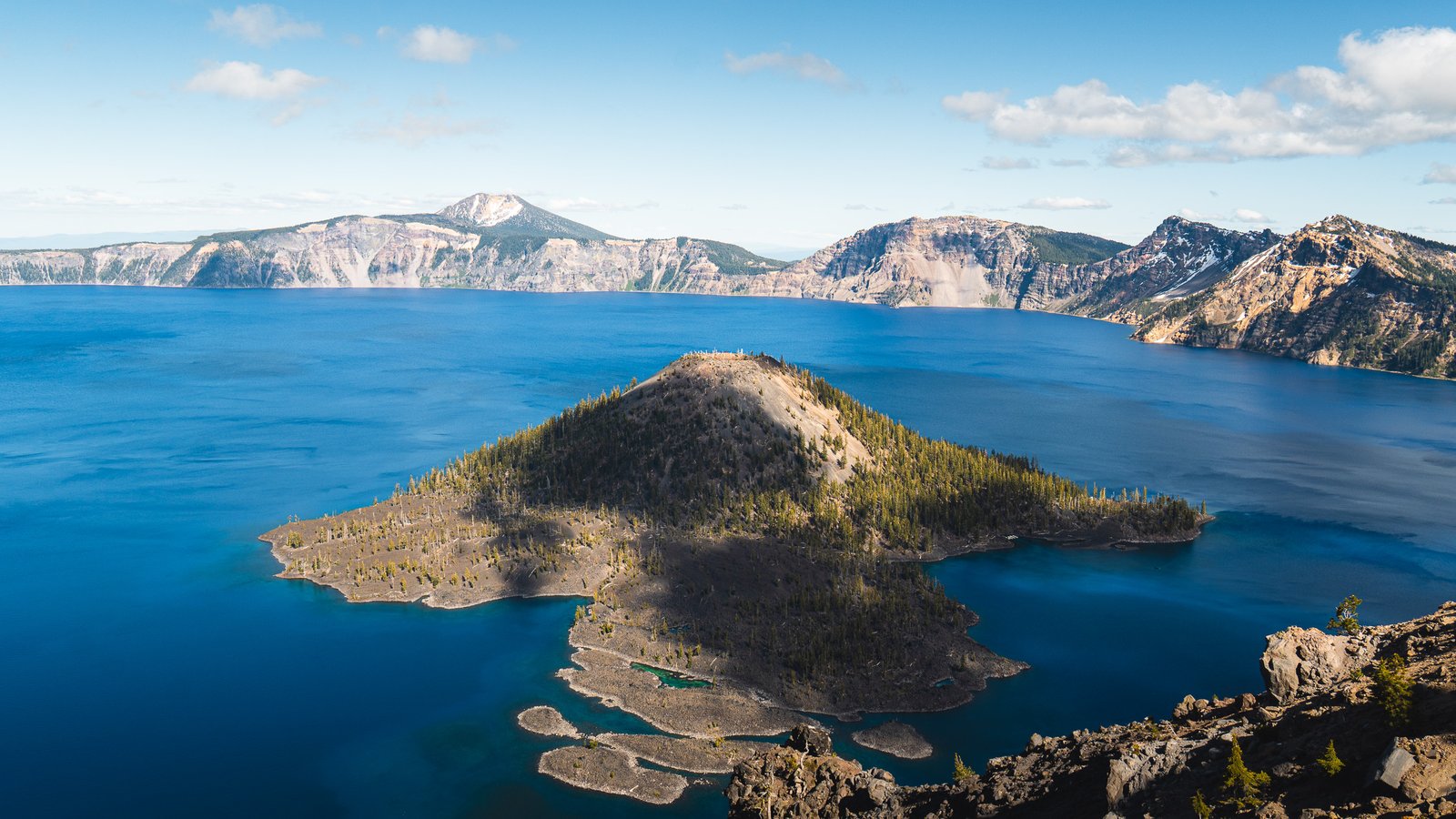
One of the things that stands out most is the intense blue color of the lake. You can see it in photos of the park, but it is much more impressive in person.
- What makes Crater Lake special
- What to see in Crater Lake National Park
- Rim Drive: a scenic road
- The best viewpoints in Crater Lake
- Best hikes in Crater Lake National Park
- Pumice Desert
- Wildlife in Crater Lake
- Where to stay when visiting Crater Lake National Park
- How much time to spend in Crater Lake
- Crater Lake on an Oregon road trip
- Practical information for visiting Crater Lake National Park
- Our opinion of Crater Lake
What makes Crater Lake special
Before we start talking about what to see in Crater Lake, it is worth understanding what you are actually looking at. The lake fills the huge caldera formed after the collapse of Mount Mazama. Inside it sits Wizard Island, a volcanic cone that formed during eruptions after the collapse.
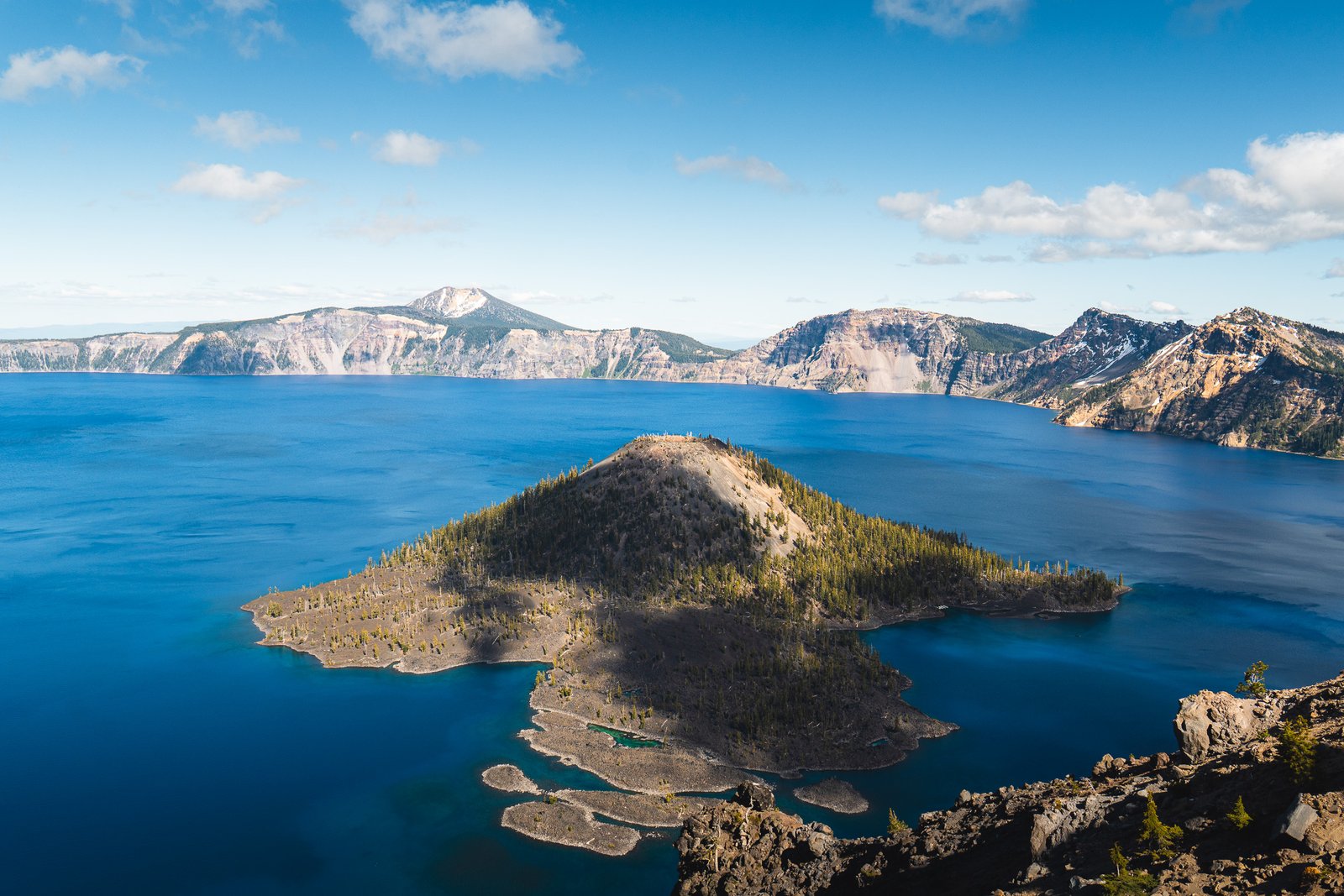
And there is one fact that really helps put its scale into perspective: Crater Lake reaches a depth of 592 meters and is the deepest lake in the United States. There are also no rivers flowing into it. The water comes mainly from rain and snow.
The result is a huge blue lake surrounded by volcanic walls rising around the old caldera, with Wizard Island emerging from the water at one end.
To us, it was one of those landscapes that makes much more sense once you see it in person.
What to see in Crater Lake National Park
Rim Village, the best place to start
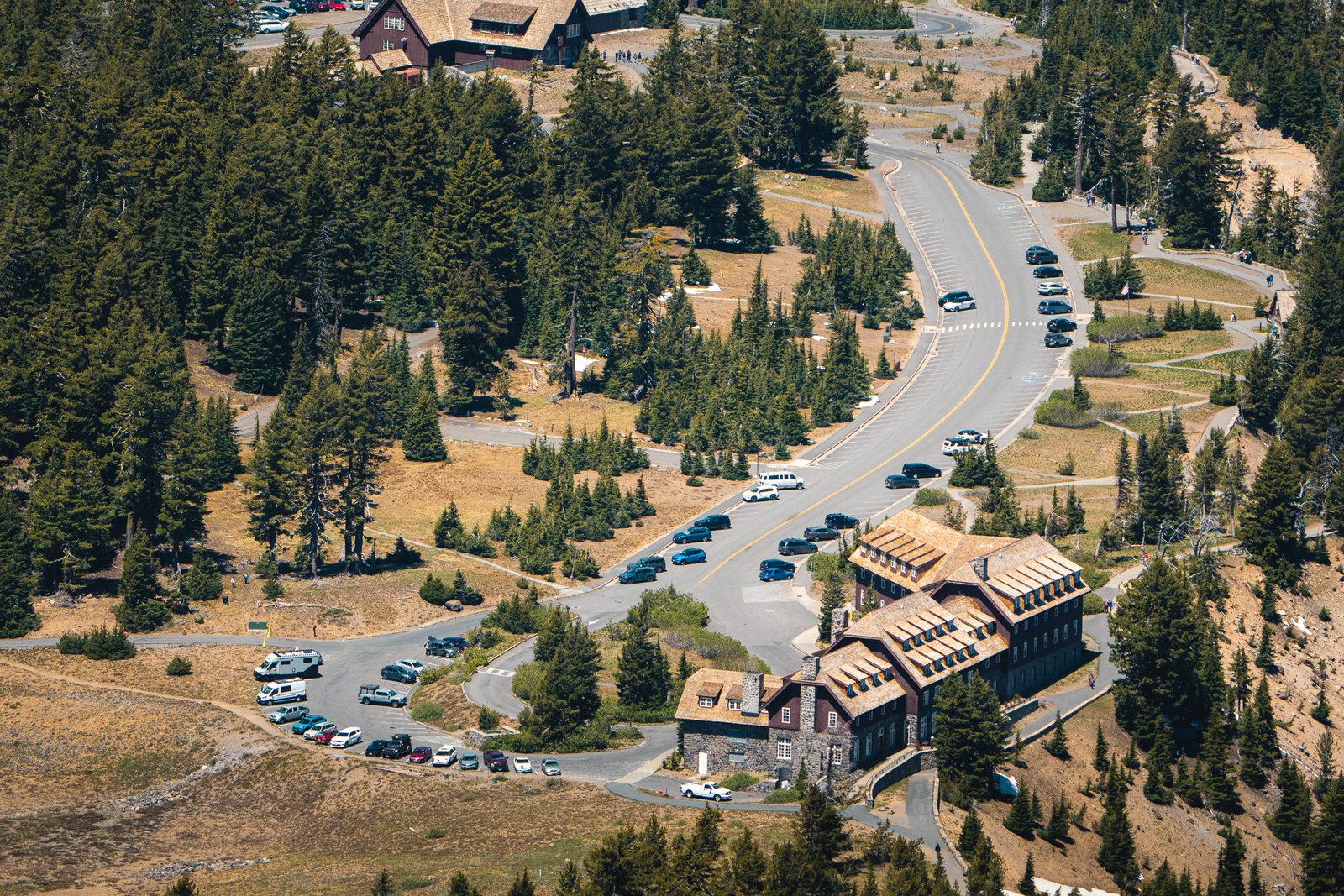
For a first introduction to Crater Lake, we would start at Rim Village.
It is one of the main areas of the park and probably where many visitors see the lake for the first time. Here you will find parking, several services, the visitor center, the historic Crater Lake Lodge and access to some of the best known viewpoints.
From Rim Village, you can walk along part of the path that follows the edge of the caldera. It is a very easy way to discover different perspectives of the lake without having to do a demanding hike.
One spot worth visiting here is Sinnott Memorial Overlook, a viewpoint built directly into the caldera wall where, as well as enjoying the scenery, you can learn a little more about the geology of the park from the interpretive panels.
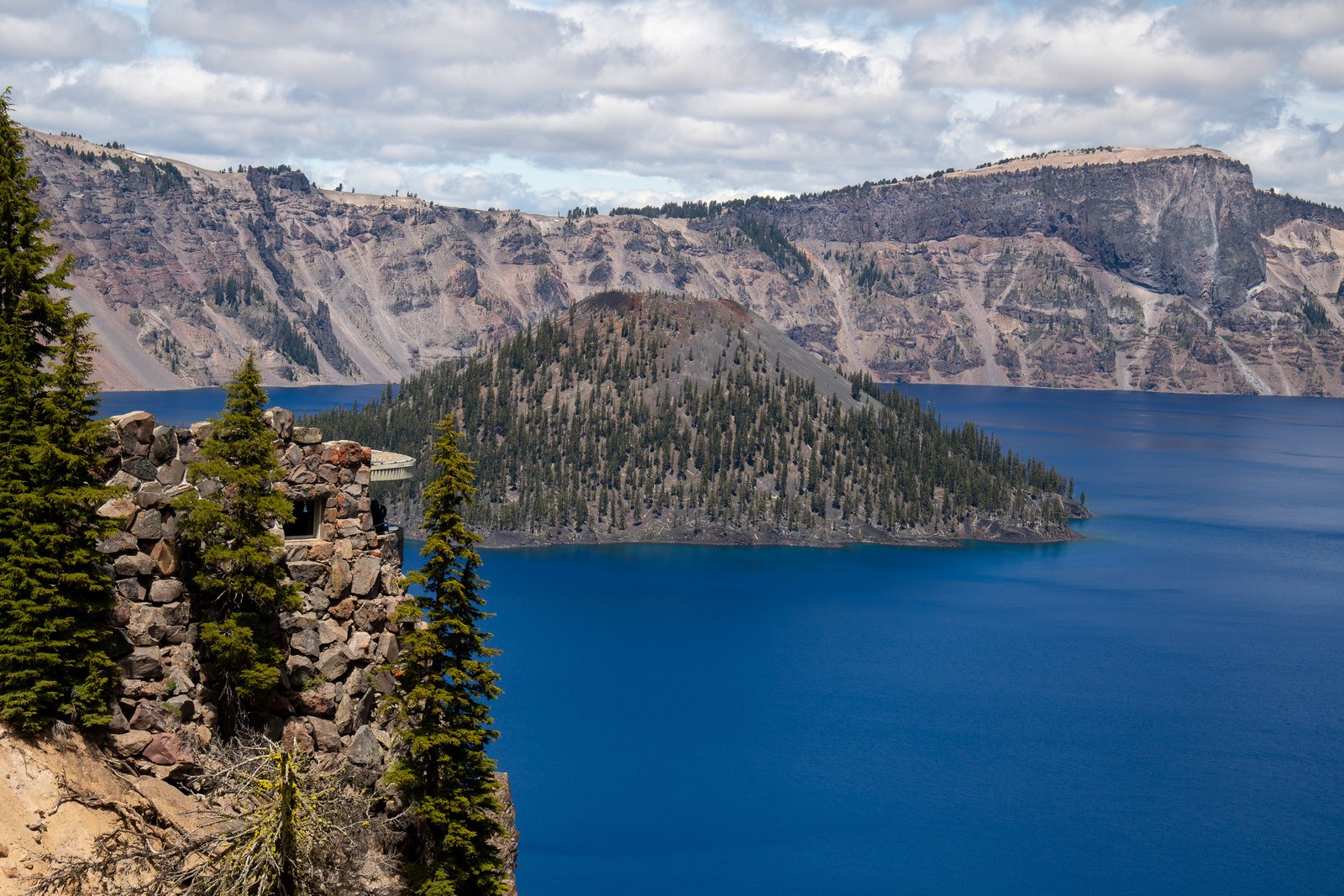
Rim Village sits at around 2,165 meters of elevation, which is worth keeping in mind if you plan to hike as soon as you arrive.
Crater Lake Lodge
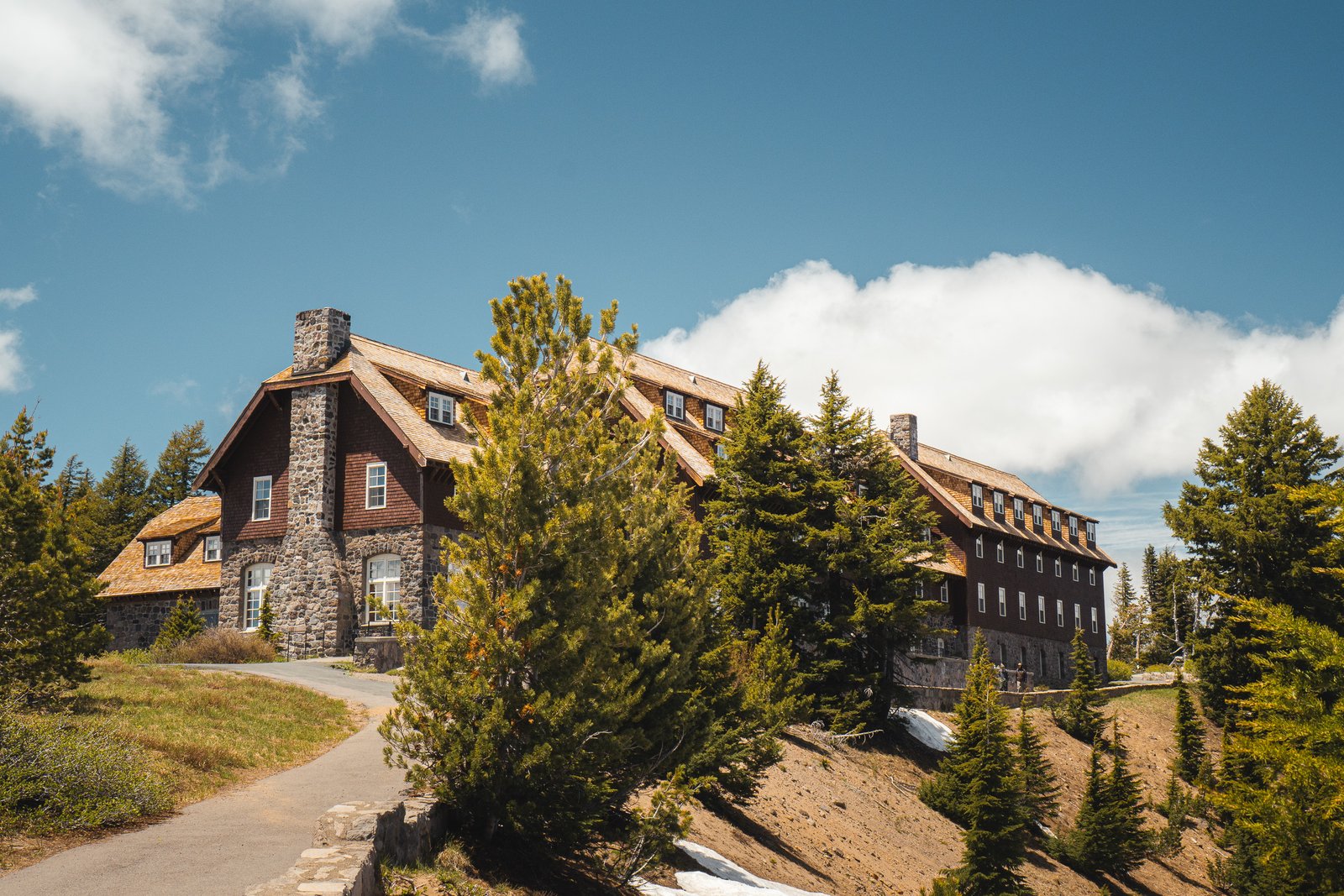
Also in Rim Village is Crater Lake Lodge, one of the most recognizable buildings in the park.
The hotel originally opened in 1915 and sits literally on the edge of the caldera. Even if you are not staying here, it is worth stopping by to see it and walk around the area.
Wizard Island and Phantom Ship
There are two formations that will probably end up appearing in many of your photos of the park: Wizard Island and Phantom Ship.
Wizard Island
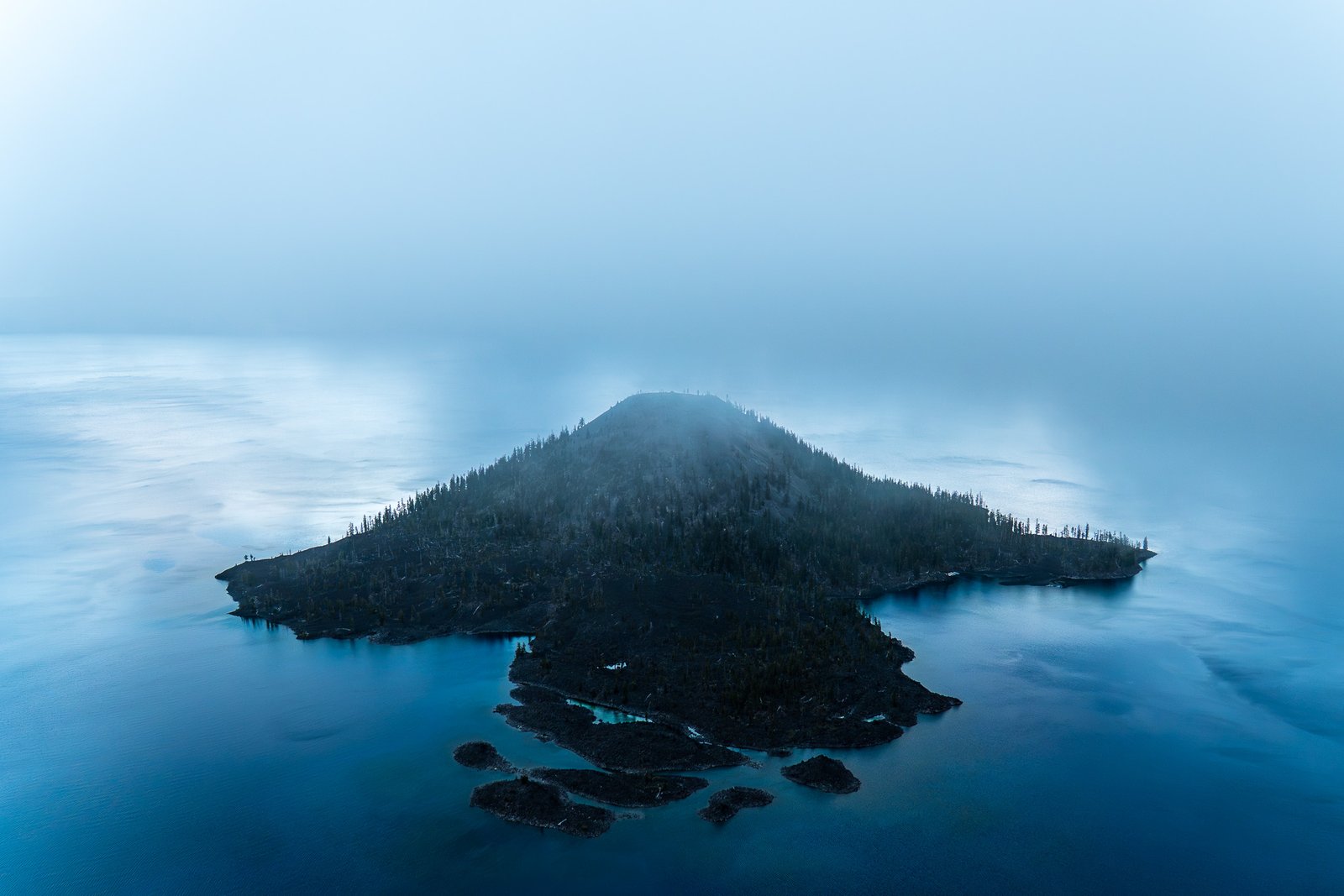
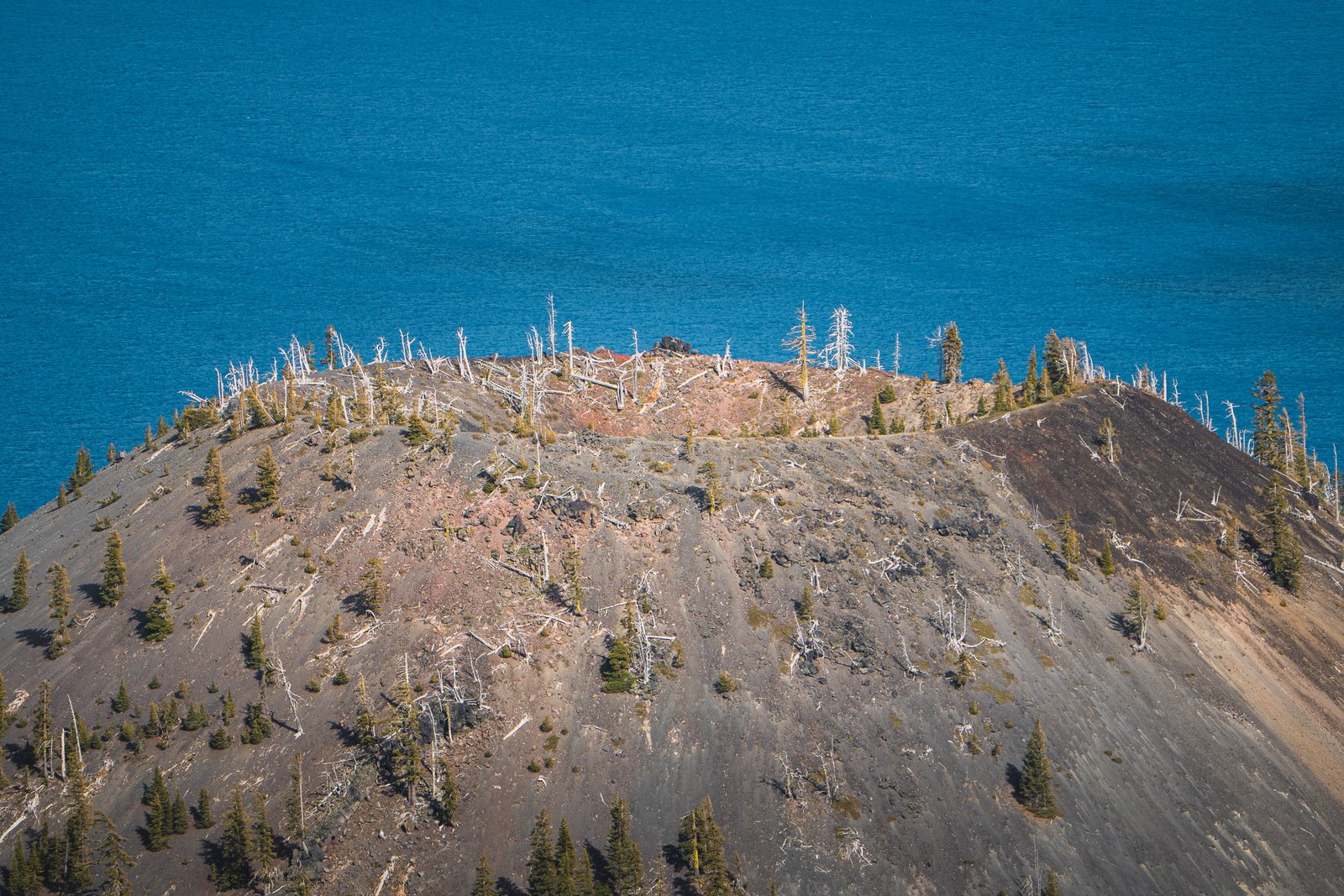
Wizard Island is the island you can see on the western side of the lake and probably the most recognizable feature of Crater Lake after the lake itself.
As we mentioned earlier, it is not simply an island. It is a volcanic cone that began to form after the collapse of Mount Mazama, when water was already starting to accumulate inside the caldera. Part of the volcano continues below the surface of the lake.
Phantom Ship
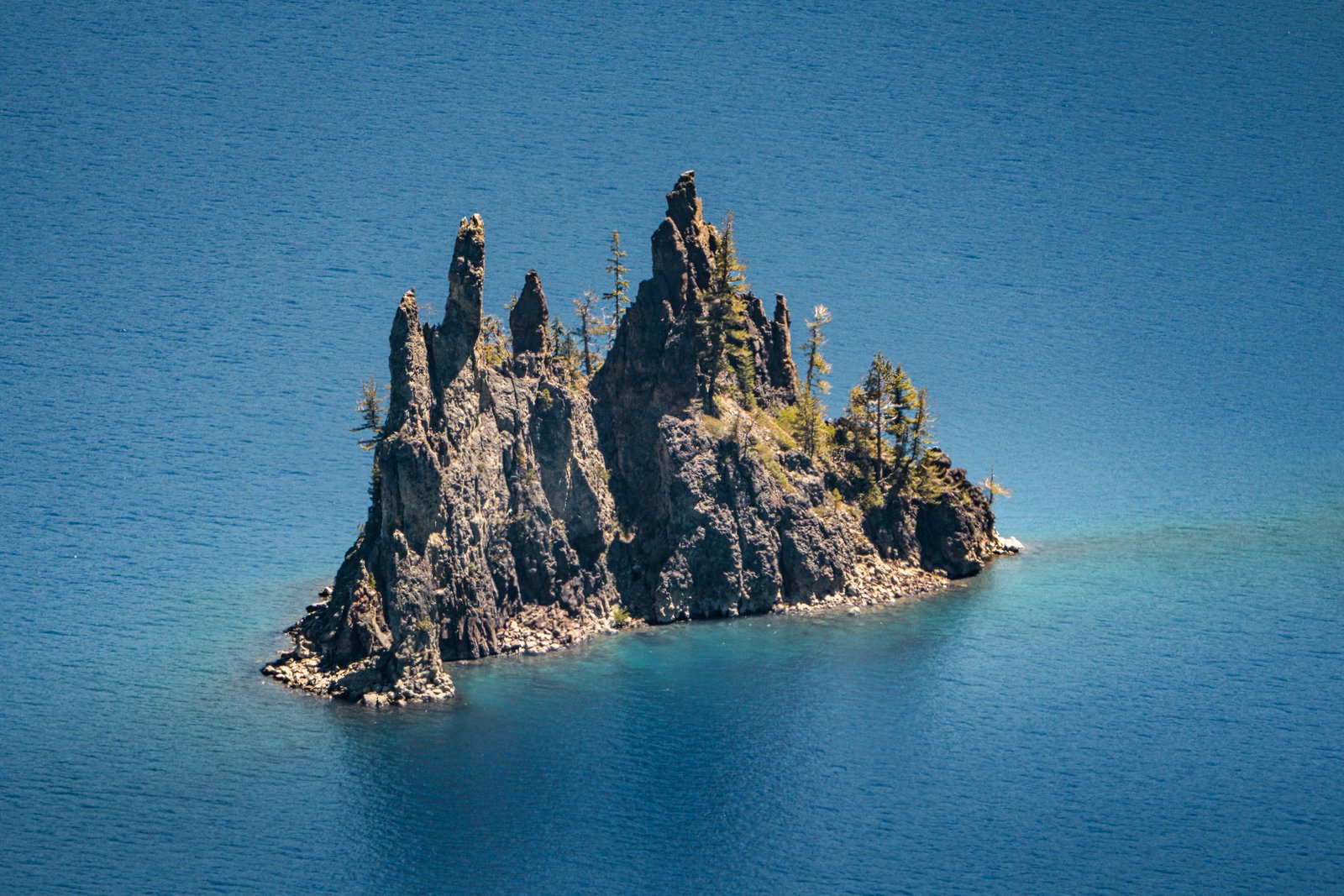
This one is different. Phantom Ship is a small rock formation near the southeastern end of the lake. From certain angles, especially from a distance, its rocky spires resemble the sails of a ship, which is where the name comes from.
It is much smaller than Wizard Island and can be easy to miss depending on the viewpoint you are at, but it is one of the most curious formations in the park.
Rim Drive: a scenic road
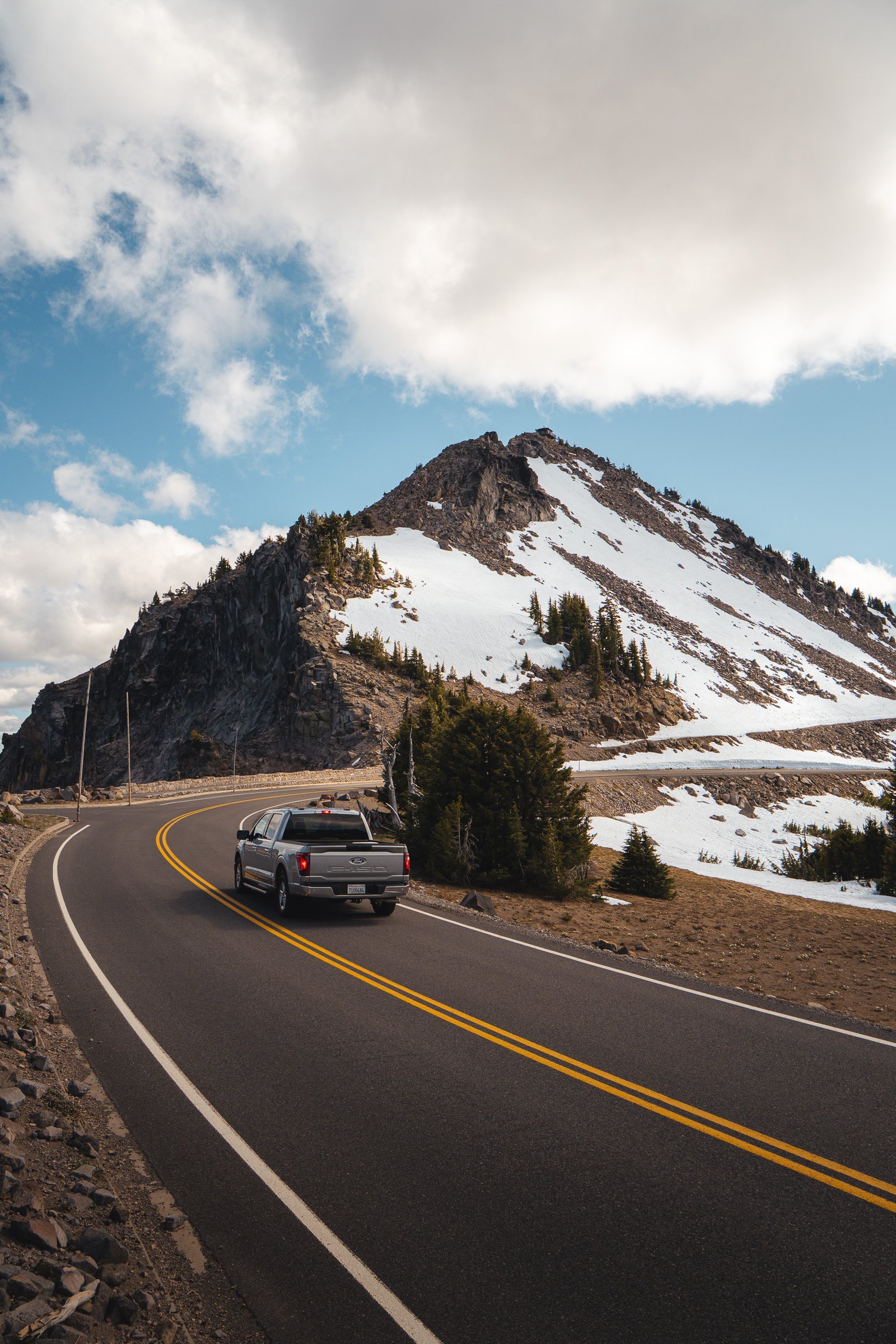
One of the best ways to visit Crater Lake National Park is simply by driving.
Rim Drive is a scenic road of about 53 kilometers that circles the lake and connects around 30 viewpoints, as well as hiking trails, picnic areas and other points of interest. The National Park Service recommends allowing at least two hours to drive it, including a few stops.
As you drive around the lake, the scenery keeps changing and you see Crater Lake from completely different angles. Wizard Island shifts position, new mountains appear in the background and some areas give you a much better view of the walls of the old caldera.
The landscape around the road also changes constantly, with forests, volcanic areas, meadows and small waterfalls making Crater Lake much more varied than you might expect from photos of the lake alone.
The best viewpoints in Crater Lake
We do not think you need to stop at absolutely every viewpoint along Rim Drive. There are plenty of them, and some offer fairly similar perspectives.
These are some of the ones we would make sure to have marked on the map.
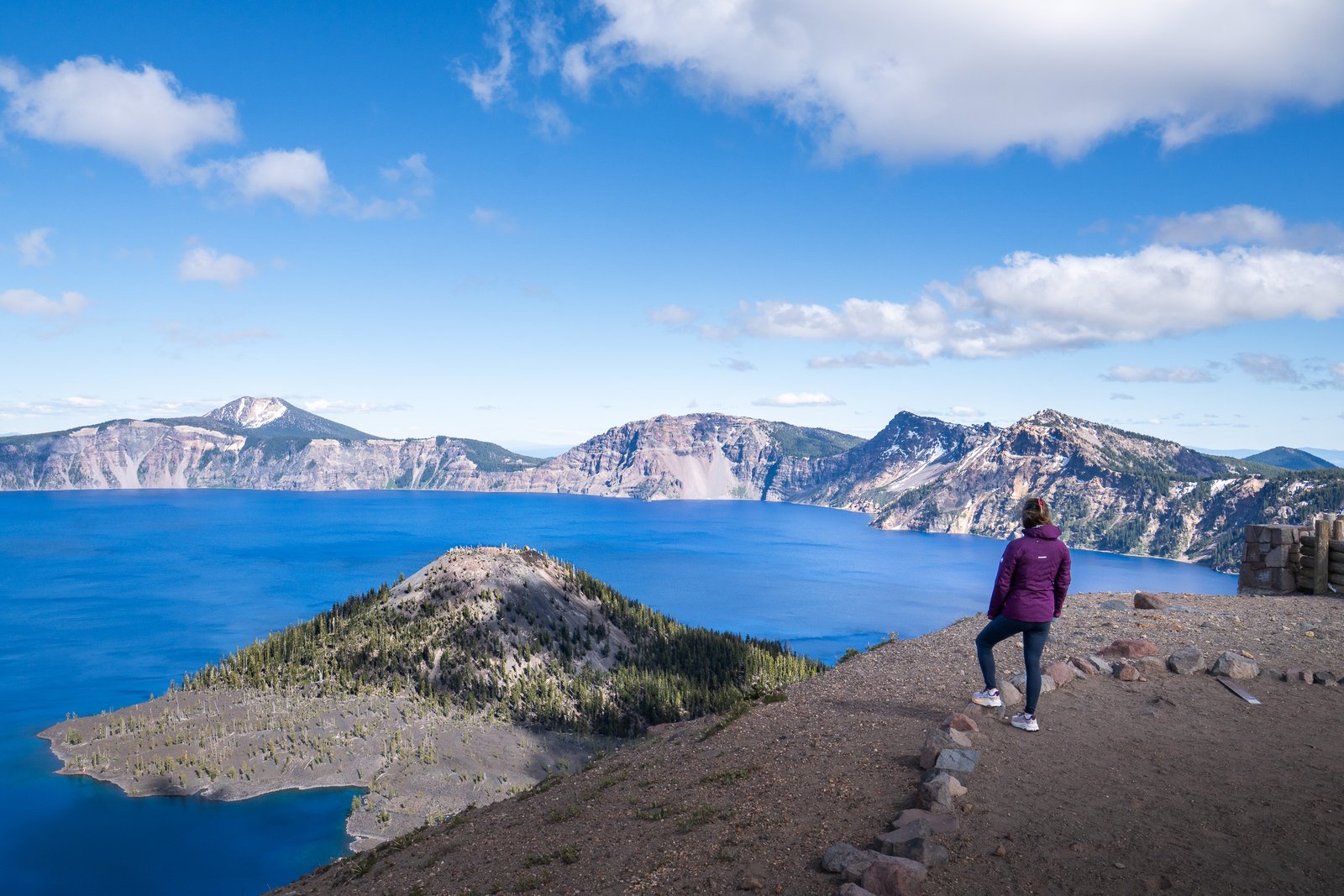
Discovery Point
One of the classic Crater Lake viewpoints and an easy stop if you are leaving Rim Village toward the western side of the lake.
From here you get one of the most recognizable views of Crater Lake and Wizard Island.
The Discovery Point Trail also starts from this area, making it a good option if you want to walk a little without doing a particularly demanding hike.
Watchman Overlook
For us, this is one of the most interesting stops on the western side of Rim Drive.
From here you get a very good view of Wizard Island, and the trail to Watchman Peak also starts here. If you are planning to do the hike, it is very easy to combine the two.
Cloudcap Overlook
Cloudcap is worth visiting both for the views and for the road that leads up to it. It sits at around 2,350 meters of elevation and is the highest paved viewpoint in the park.
The perspective here is quite different from Rim Village and gives you a better sense of the enormous scale of the caldera.
Phantom Ship Overlook
As the name suggests, this is one of the best places to see Phantom Ship. From this side of the lake, the small rock formation is much easier to spot and its ship-like shape becomes much clearer.
Sun Notch
Sun Notch is a little different because it is not simply a roadside viewpoint. You need to walk about 1.3 kilometers round trip to reach the rim of the caldera, where you get another good perspective of Phantom Ship. The elevation gain is only 46 meters, so it can be a good option if you want to add a short walk while driving Rim Drive.
Vidae Falls
Vidae Falls is a small waterfall next to East Rim Drive and offers a different kind of stop between all the viewpoints over the lake. We would not call it one of the park’s absolute must-sees, but if the road is open and you are driving past, it is worth stopping for a few minutes.
Best hikes in Crater Lake National Park
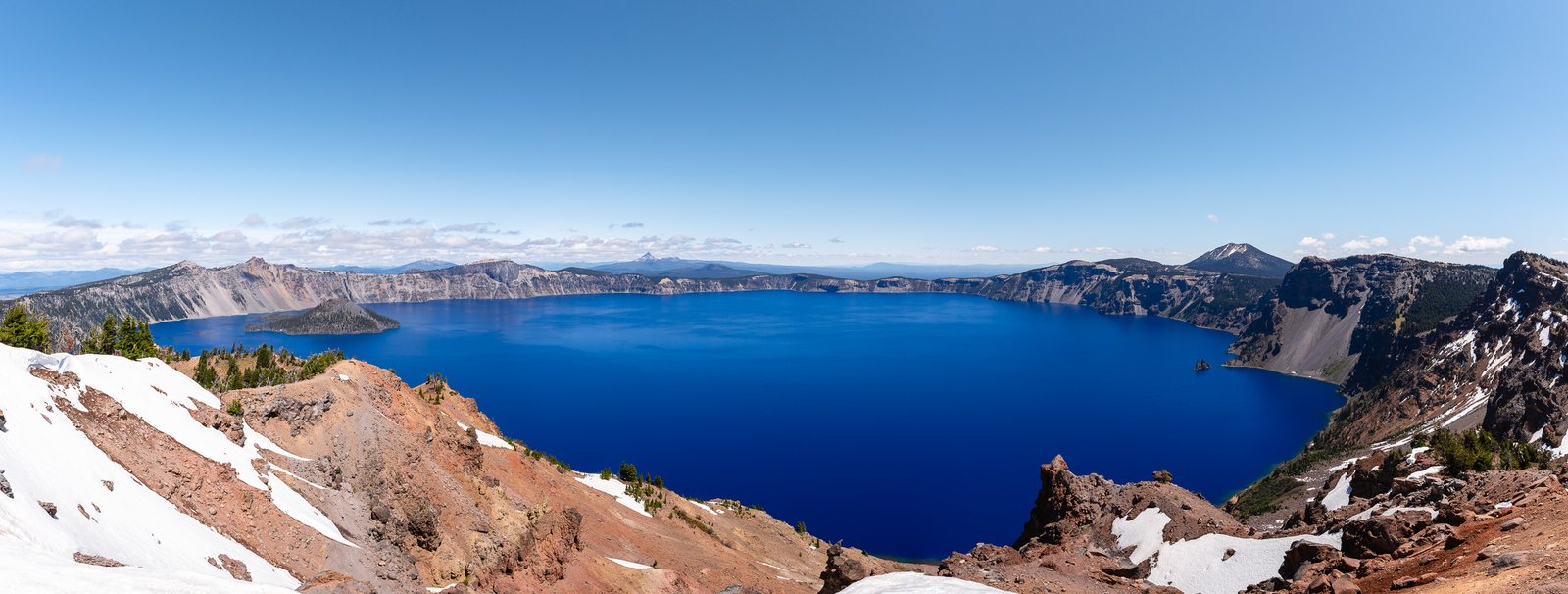
For us, Crater Lake gets even better once you leave the viewpoints behind and start hiking. You do not need to do especially long trails to find spectacular views, and some of the best panoramas of the lake are found along the hiking trails.
Hike to Garfield Peak
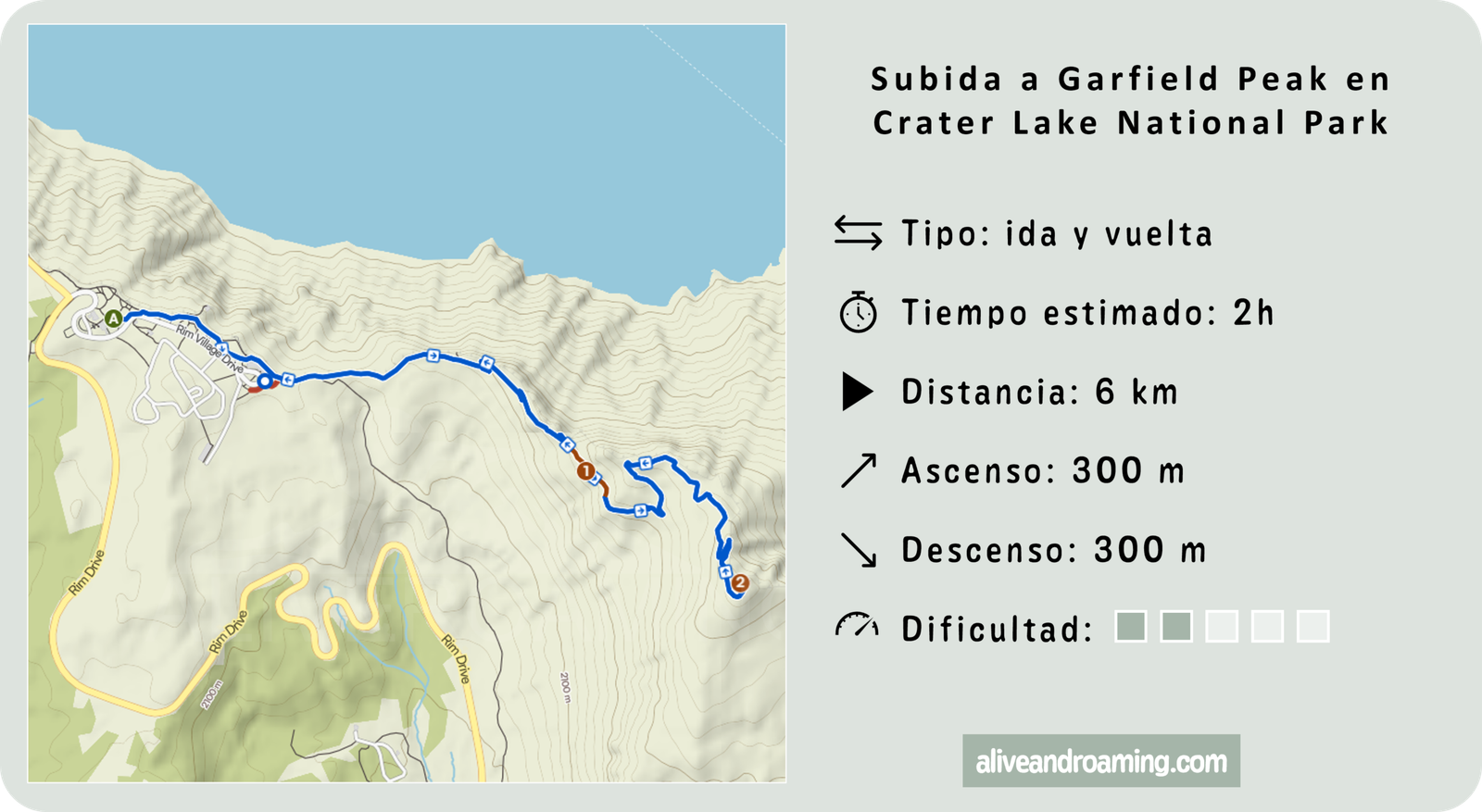
If we could recommend only one hike in Crater Lake, it would probably be Garfield Peak.
The trail starts practically behind Crater Lake Lodge, so it is very easy to combine with a visit to Rim Village.
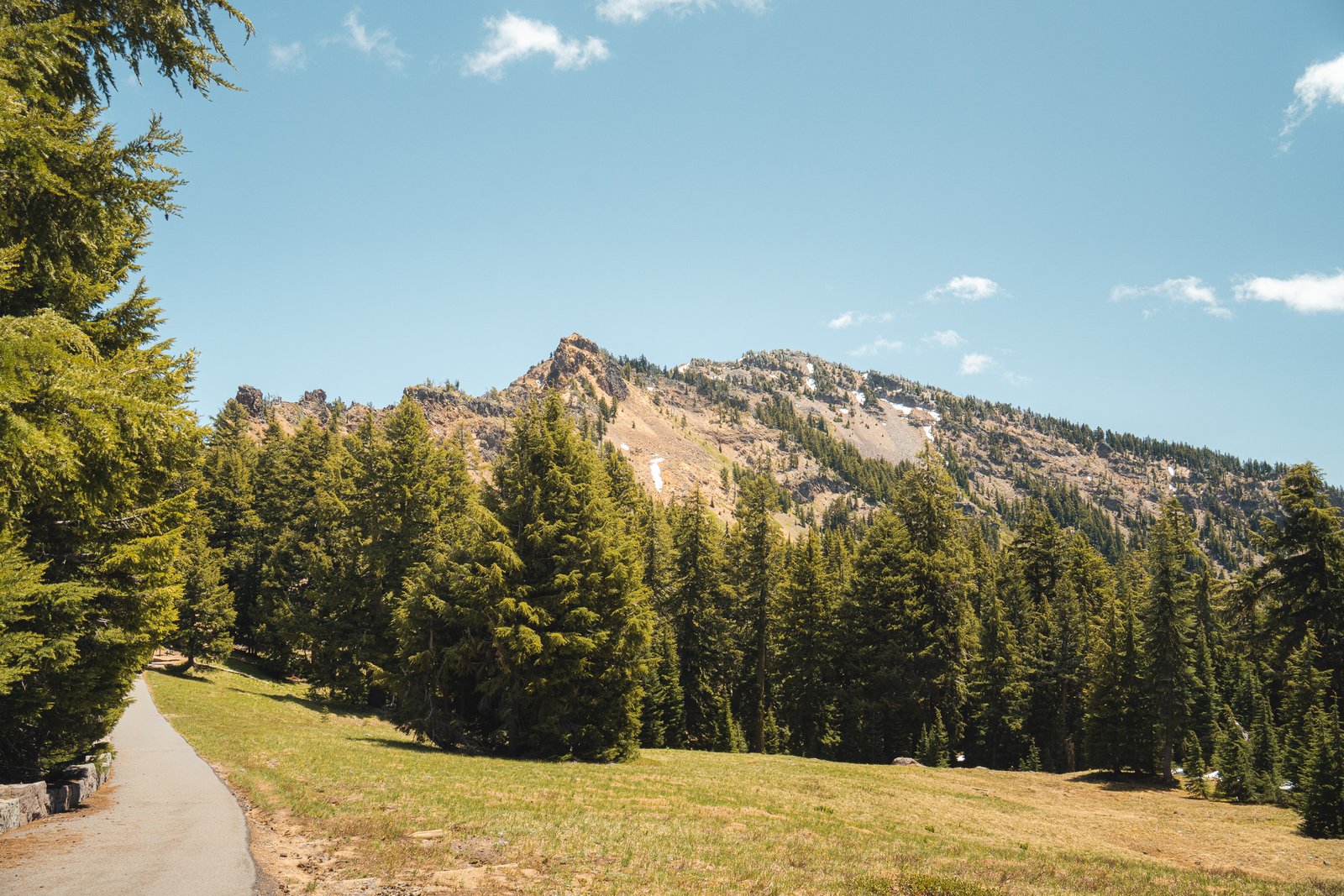
The hike is about 5.8 kilometers round trip with 308 meters of elevation gain. It is not especially long, but keep in mind that you are hiking at fairly high elevation and you definitely feel most of the climb.
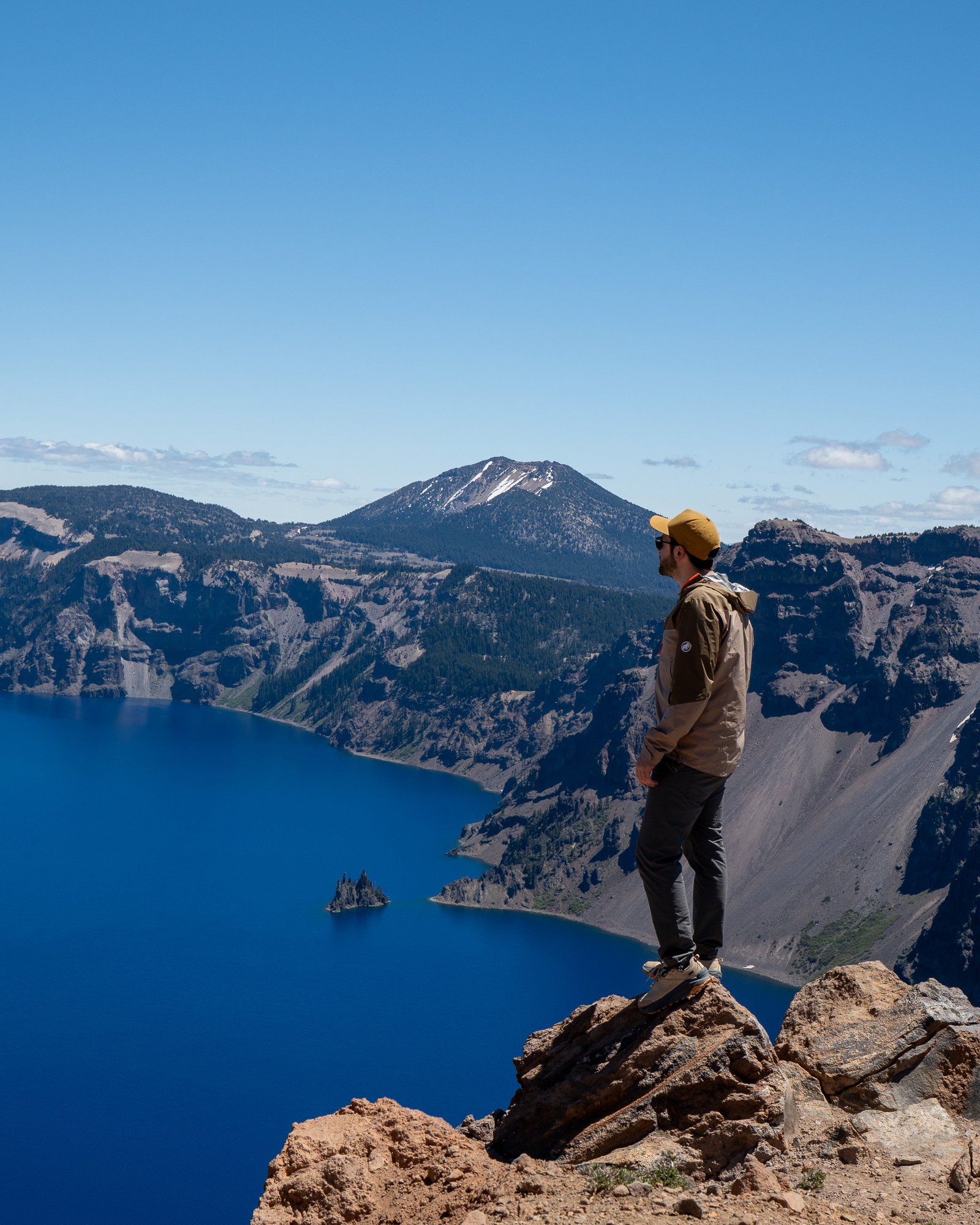
The trail starts among the trees, but little by little it opens up and views over Crater Lake begin to appear as you climb. That is what we liked most about Garfield Peak. Up to this point, much of a visit to the park involves looking at the lake from the rim of the caldera. On Garfield Peak, you start gaining height and the perspective changes completely.
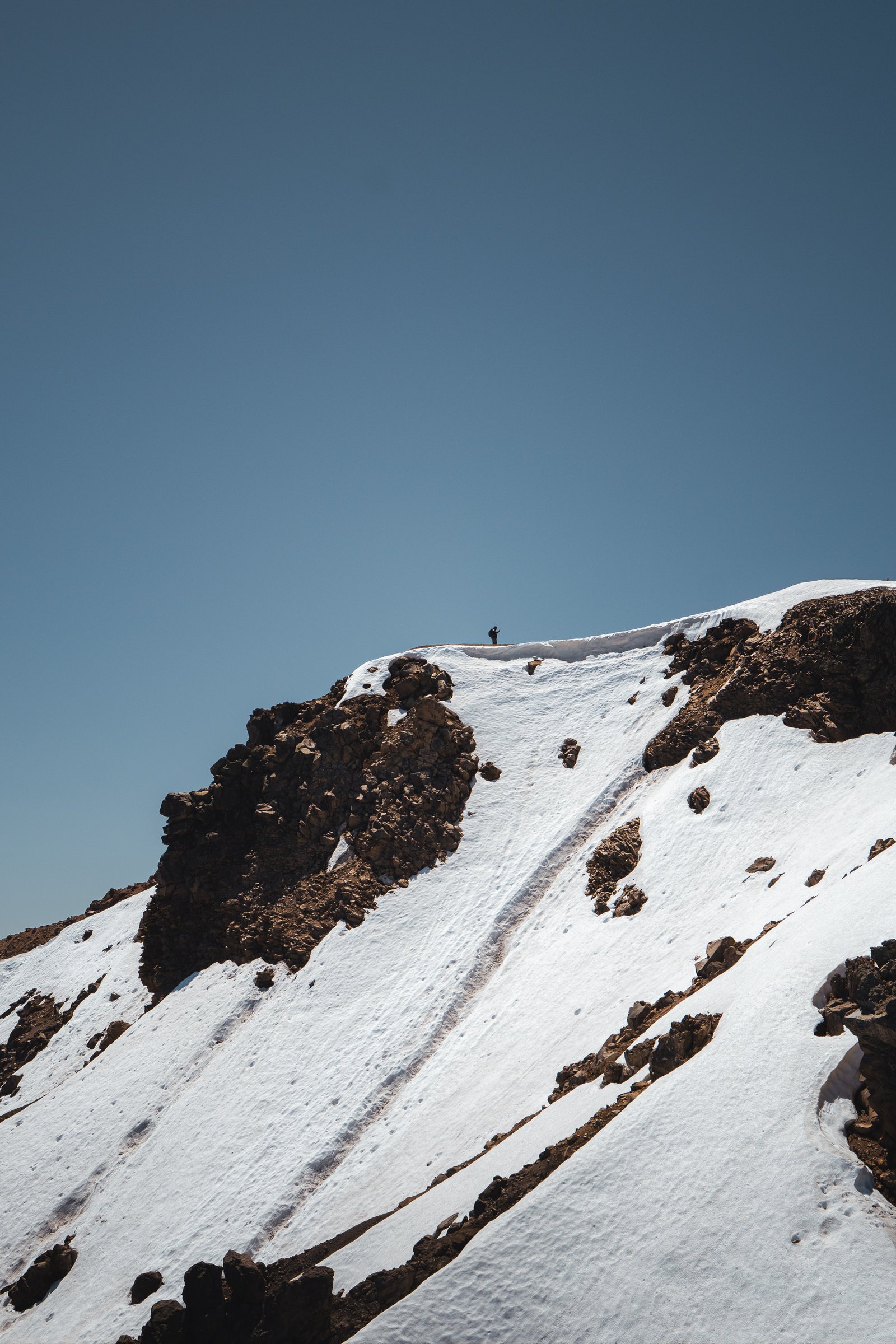
From the top, you can see a much larger part of the lake, Wizard Island, the caldera walls and many of the mountains surrounding the park.
This was one of the areas where we saw the most wildlife. During the hike we spotted pikas, marmots, deer and quite a few birds. We would not visit Crater Lake just for the wildlife, but seeing them along the way made the hike even more enjoyable.
Watchman Peak Trail
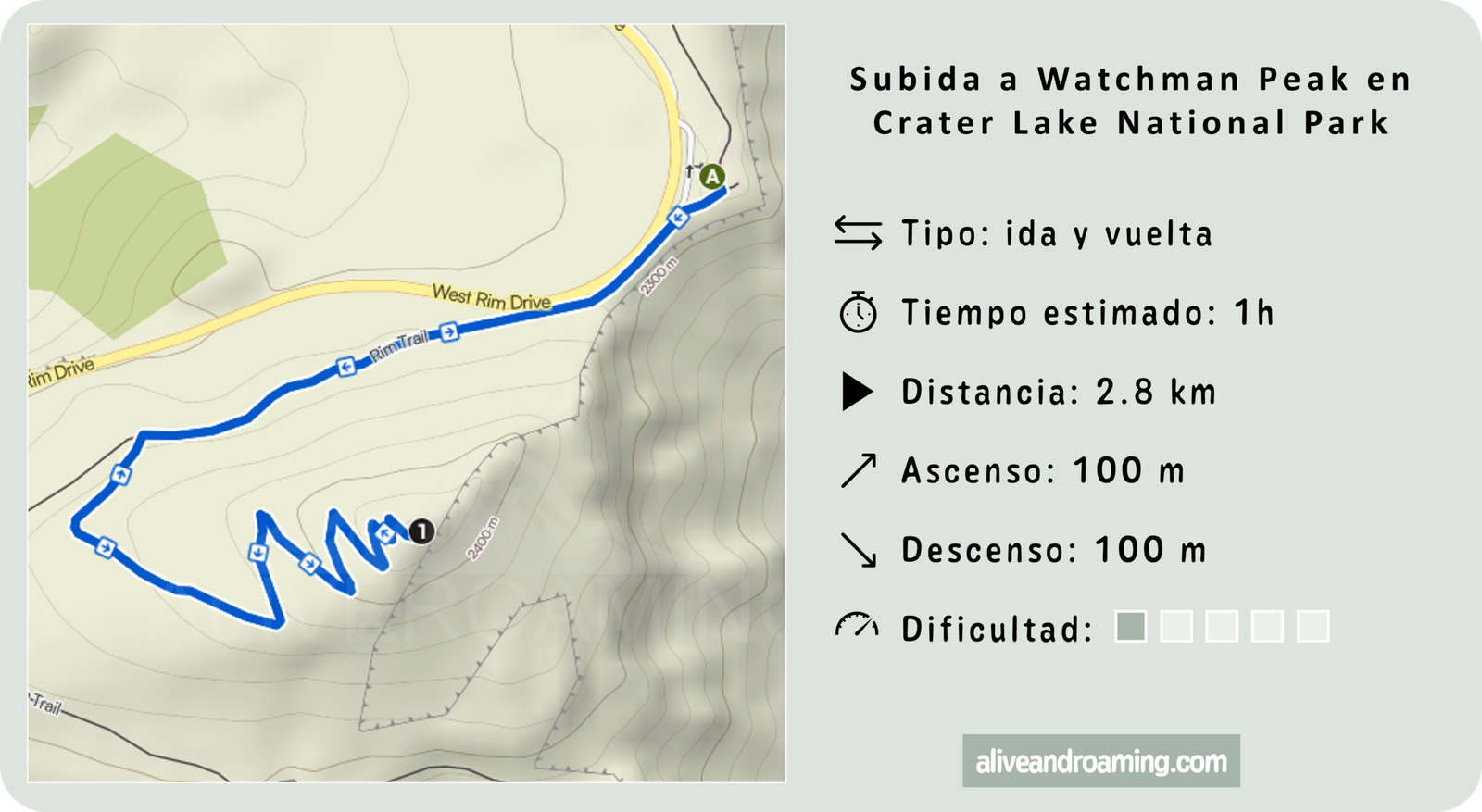
If you are looking for a shorter hike, we think Watchman Peak Trail is one of the best options.
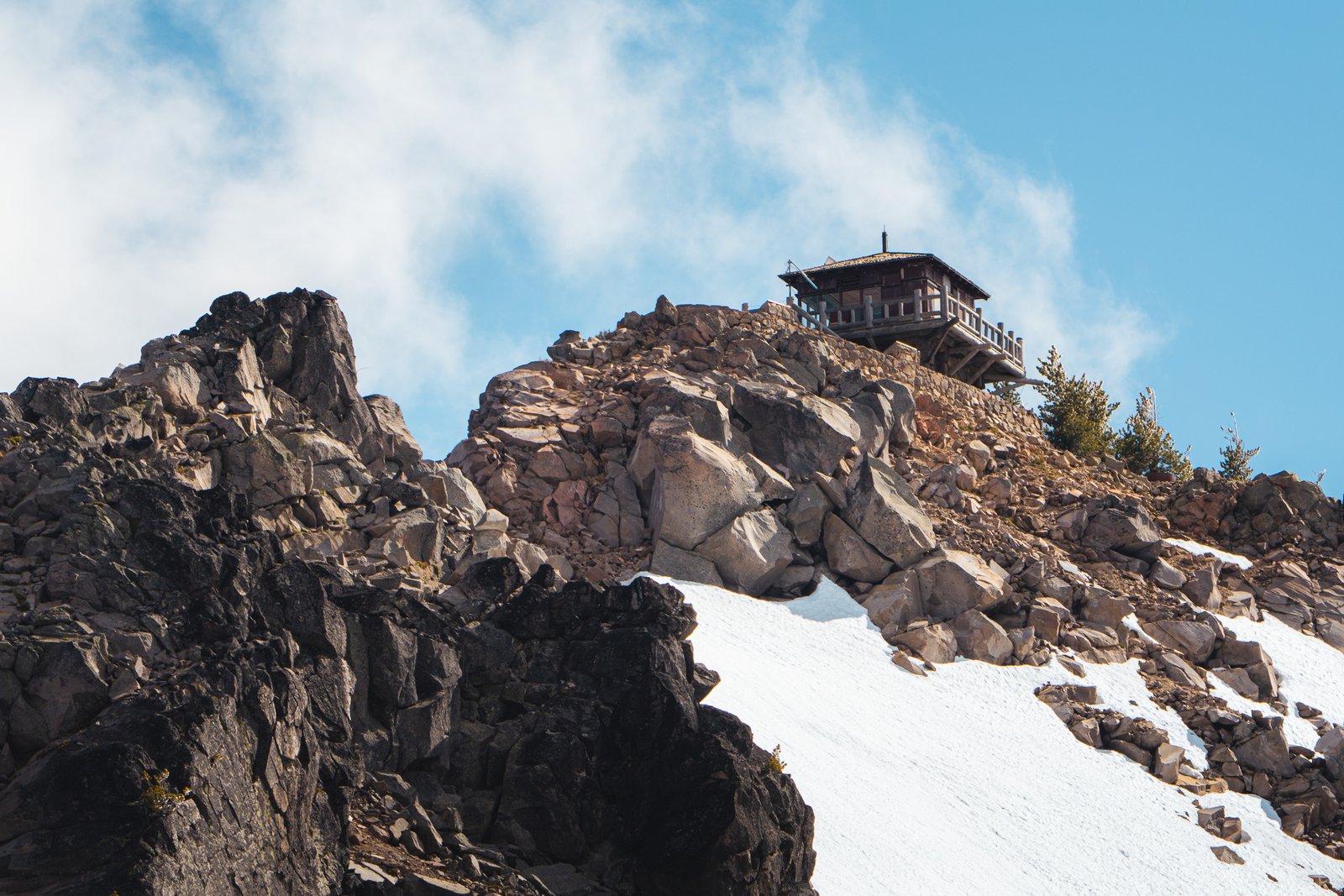
The trail starts next to Watchman Overlook and climbs to an old fire lookout at the top of the mountain. It is approximately 2.6 kilometers round trip with 128 meters of elevation gain. It is not a long hike and the reward is worth it. From the top you get almost 360-degree views and one of the best perspectives of Wizard Island.
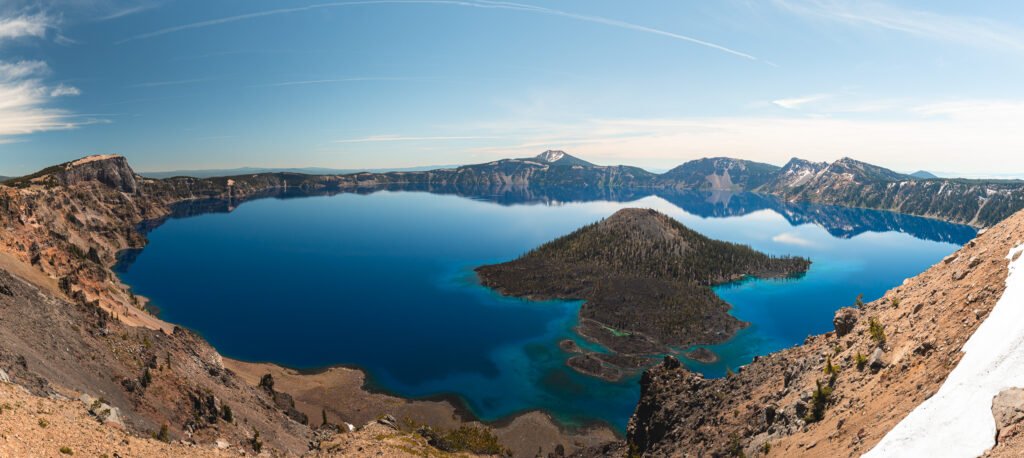
It is also a very popular hike for sunset because of its orientation. That means it can get quite busy toward the end of the day.
If you only have a few hours in Crater Lake and want to do a short hike, this would be one of our first choices.
Pumice Desert
One thing we really liked about Crater Lake was discovering that the park is not just about the lake, even if we admit that the lake is the most impressive part.
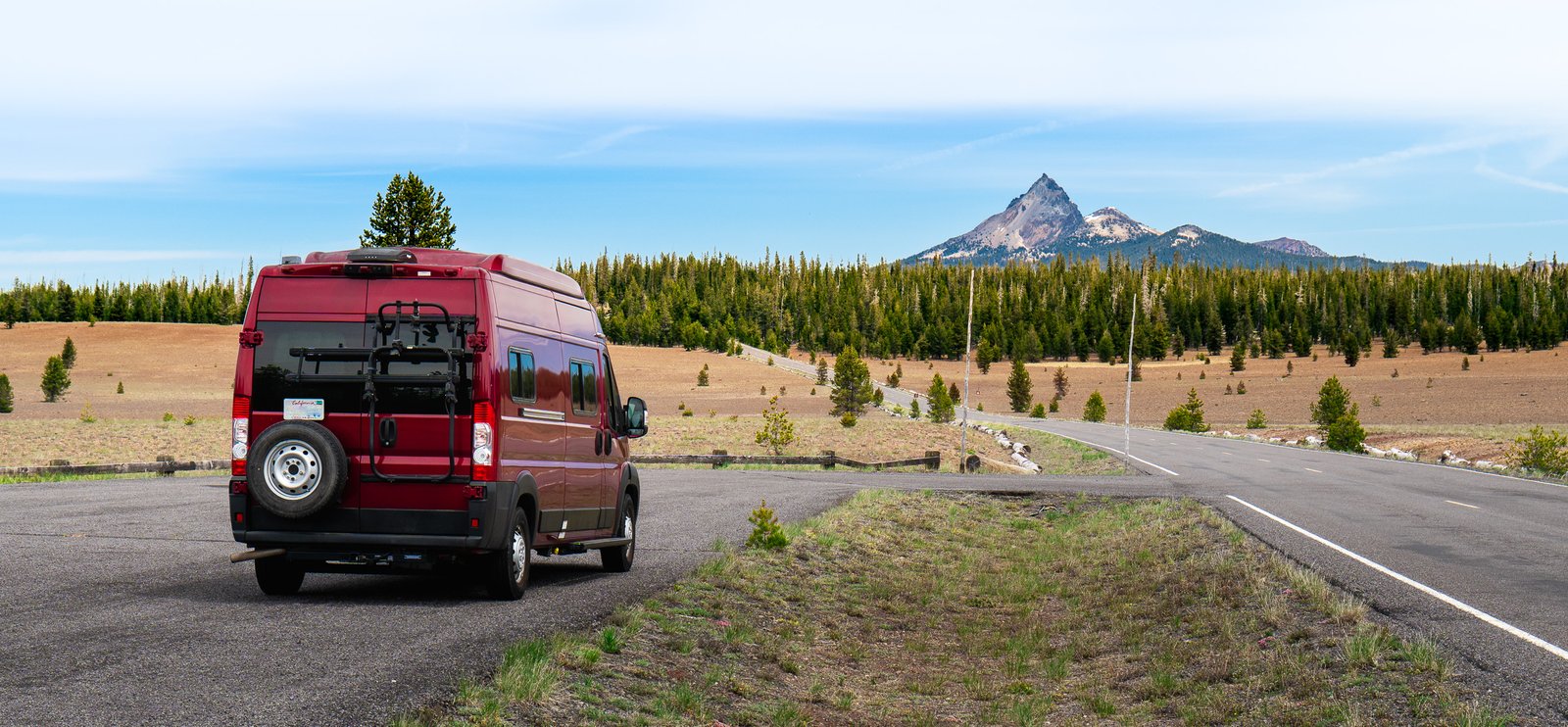
Another landscape that caught our attention was Pumice Desert, a huge stretch of volcanic terrain next to North Entrance Road that feels surprisingly different from the surrounding forest.
As a curious detail, before the eruption of Mount Mazama this area was a glacial valley. It was later buried beneath huge deposits of pumice and other volcanic material. In some places, those deposits are more than 60 meters deep.
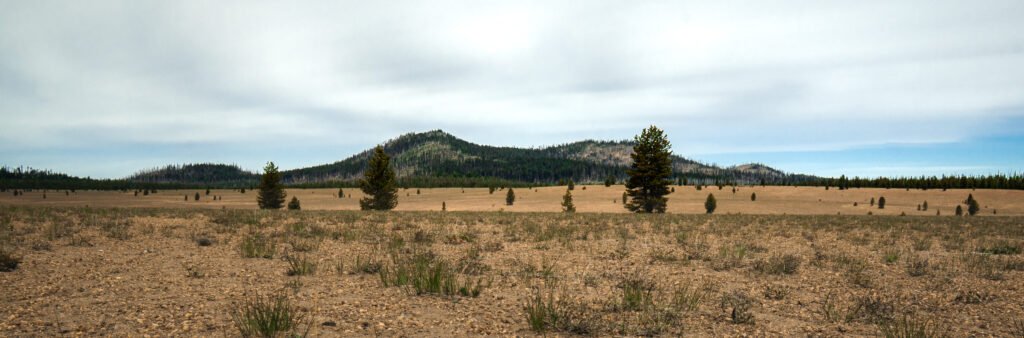
The ground is extremely porous and retains very little moisture, which makes it very difficult for vegetation to grow. That is why, thousands of years after the eruption, the area still has an almost desert-like appearance.
It may not be the place we would plan an entire trip to Crater Lake around, but if you are entering or leaving through the north entrance, it is worth a stop. It is another good example of how much the landscape changes within the park.
Wildlife in Crater Lake


Crater Lake has forests, alpine meadows, volcanic areas and large changes in elevation, so there is also quite a variety of wildlife.
You may come across deer, marmots, pikas, coyotes, squirrels, black bears and many different species of birds.

Seeing wildlife in this park is not especially easy and, as always, it depends a lot on luck. In our case, we were particularly lucky on the hike up Garfield Peak, where we saw pikas, marmots and deer, as well as quite a few birds.
Where to stay when visiting Crater Lake National Park
If you want to spend two days in the park, staying inside Crater Lake has one clear advantage: you can start and finish the day practically next to the lake. That makes it much easier to enjoy the first and last hours of the day.
Mazama Campground
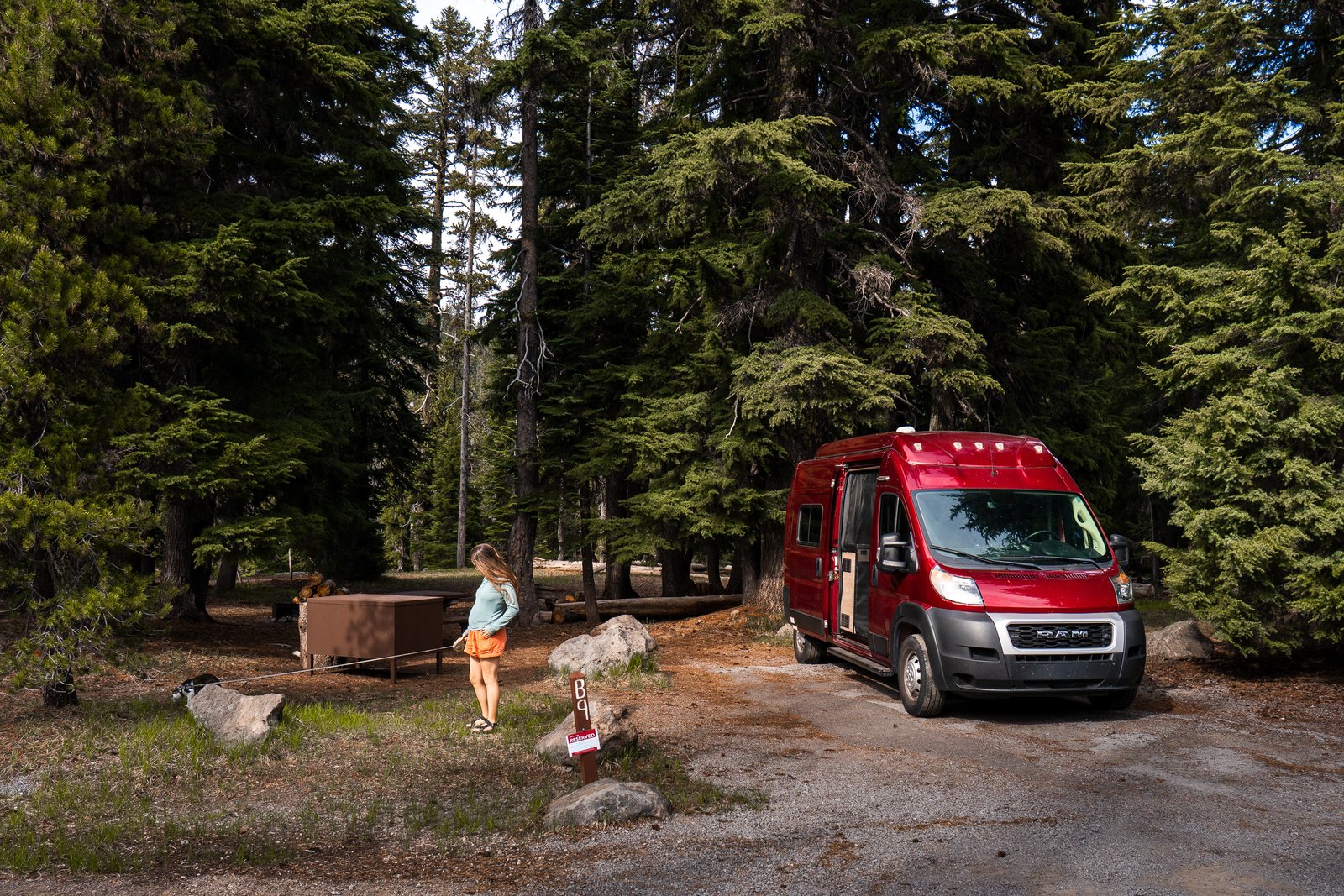
For anyone traveling by camper van, RV or tent, Mazama Campground is probably the most practical option inside the park.
It is located in Mazama Village, about 11 kilometers south of Rim Village, surrounded by forest.
The campground has more than 200 sites and facilities including restrooms, a store and food storage lockers to keep food safe from wildlife. It only operates during the summer season, and the exact opening dates depend on how much snow has accumulated each year.
For a road trip like ours, staying inside the park makes a lot of sense. You avoid a long drive at the end of the day and can be back by the lake first thing in the morning.
Also important if you are traveling by camper van: overnight parking is not allowed at viewpoints, parking areas or picnic areas inside the park. You need to stay at an authorized campground.
Cabins at Mazama Village
If you want something a little more comfortable without necessarily paying for the Crater Lake Lodge experience, there are also cabins at Mazama Village. They are in the same area as the campground and can be a good alternative if you want to stay inside the park but are not traveling with your own accommodation.
Crater Lake Lodge
The most special option is, without a doubt, Crater Lake Lodge. The hotel is located in Rim Village, practically on the edge of the caldera, and some rooms have views of the lake.
It would not be our first choice if you simply need a place to sleep for a short stop during a road trip, but it can definitely be worth it if you want to make your stay at Crater Lake a little more special or spend a few extra days there.
The lodge usually operates from around mid-May to early October, although the exact dates can vary depending on conditions.
How much time to spend in Crater Lake
We think one or two days is the perfect amount of time for a first visit to Crater Lake.
Crater Lake in 1 day
If you only have one day, we would prioritize:
- Rim Village and Sinnott Memorial Overlook.
- Drive all accessible sections of Rim Drive.
- Stop at Discovery Point, Watchman Overlook and several viewpoints on the eastern side.
- Hike Watchman Peak Trail if you want to include a short walk.
- Stop at Pumice Desert if you are entering or leaving via North Entrance Road.
With a full day, you can get a very good feel for the park.
Crater Lake in 2 days
With two days, you can take things much more slowly.
Day 1: Rim Village, Rim Drive, the main viewpoints, Pumice Desert and Watchman Peak.
Day 2: Garfield Peak in the morning, any stops you may have missed and some time to return to your favorite viewpoints. You can also visit the visitor center in Rim Village.
For us, one day is enough to get a good first impression, but if you are on a road trip and have the option to spend two days here, we think it is worth it. Especially if you want to combine the scenic drive and viewpoints with some hiking.
Crater Lake on an Oregon road trip
Our visit to Crater Lake was part of a road trip from California to Seattle, so the park was not our final destination but one of the stops along the way. Based on our experience, we think it works very well as part of this kind of route.
We found Crater Lake fairly easy to explore and plan, especially compared with much larger National Parks. Most of the viewpoints, several hiking trails and the main places to stay are all concentrated within a relatively small area.
It can also be a perfect stop between Northern California and the rest of Oregon if you are traveling toward Portland or Seattle.
Practical information for visiting Crater Lake National Park
Best time to visit Crater Lake
If your goal is to drive Rim Drive and go hiking, July, August and September are the easiest months to visit the park.
Crater Lake is one of the snowiest places in the United States and receives an average of around 12 to 13 meters of snow each year. So even though the park remains open year-round, many roads and trails stay closed for months.
May and June can be especially deceptive. We visited in June and nighttime temperatures dropped to around 0°C. We also found snow on many of the trails and roads.
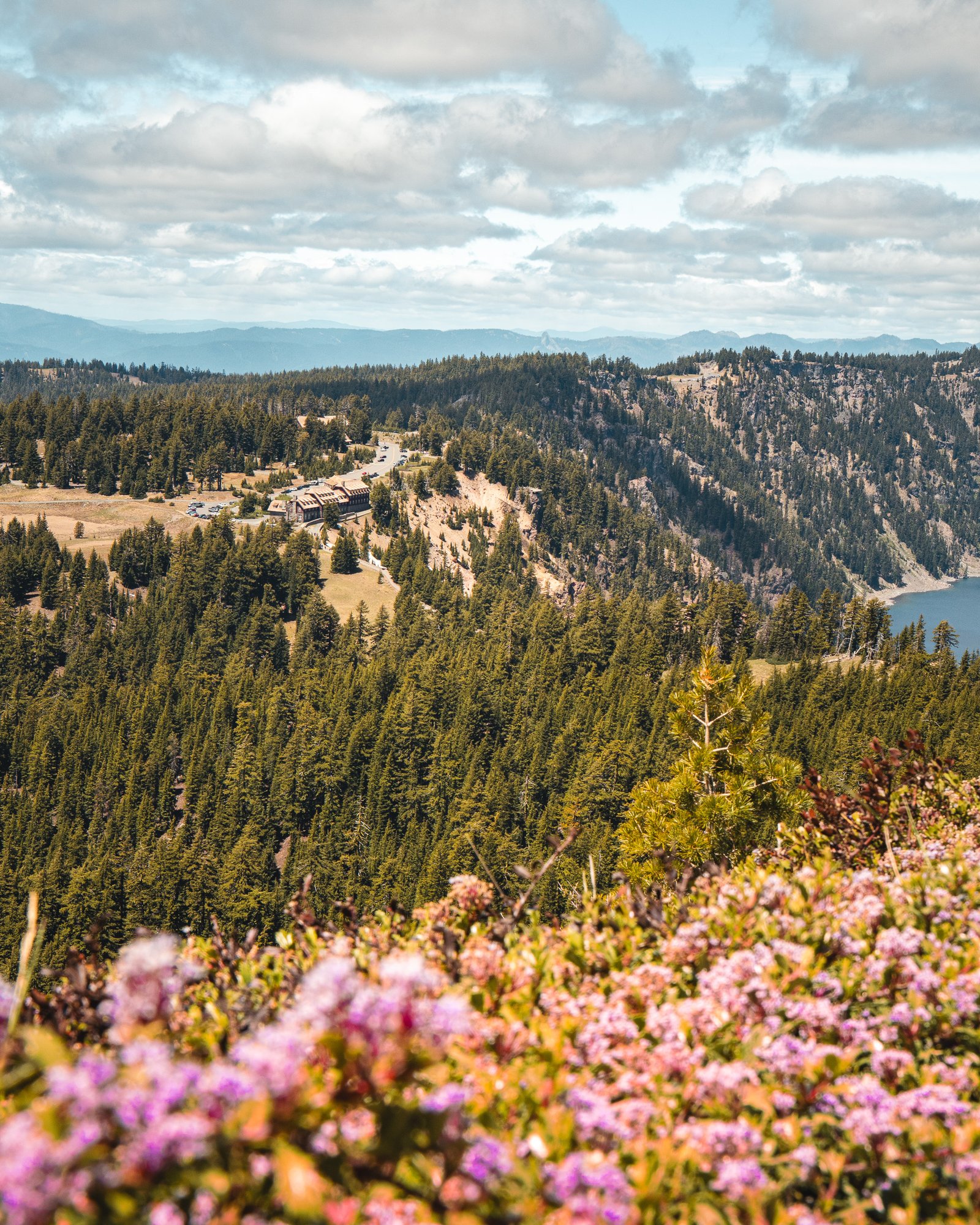
The weather can be good elsewhere in Oregon while Crater Lake still has several meters of accumulated snow. North Entrance and parts of Rim Drive can remain closed well into June depending on the year.
If you visit in spring or early summer, we would not assume that the full route will be open. In our case, we encountered several road closures.
Always check current road conditions
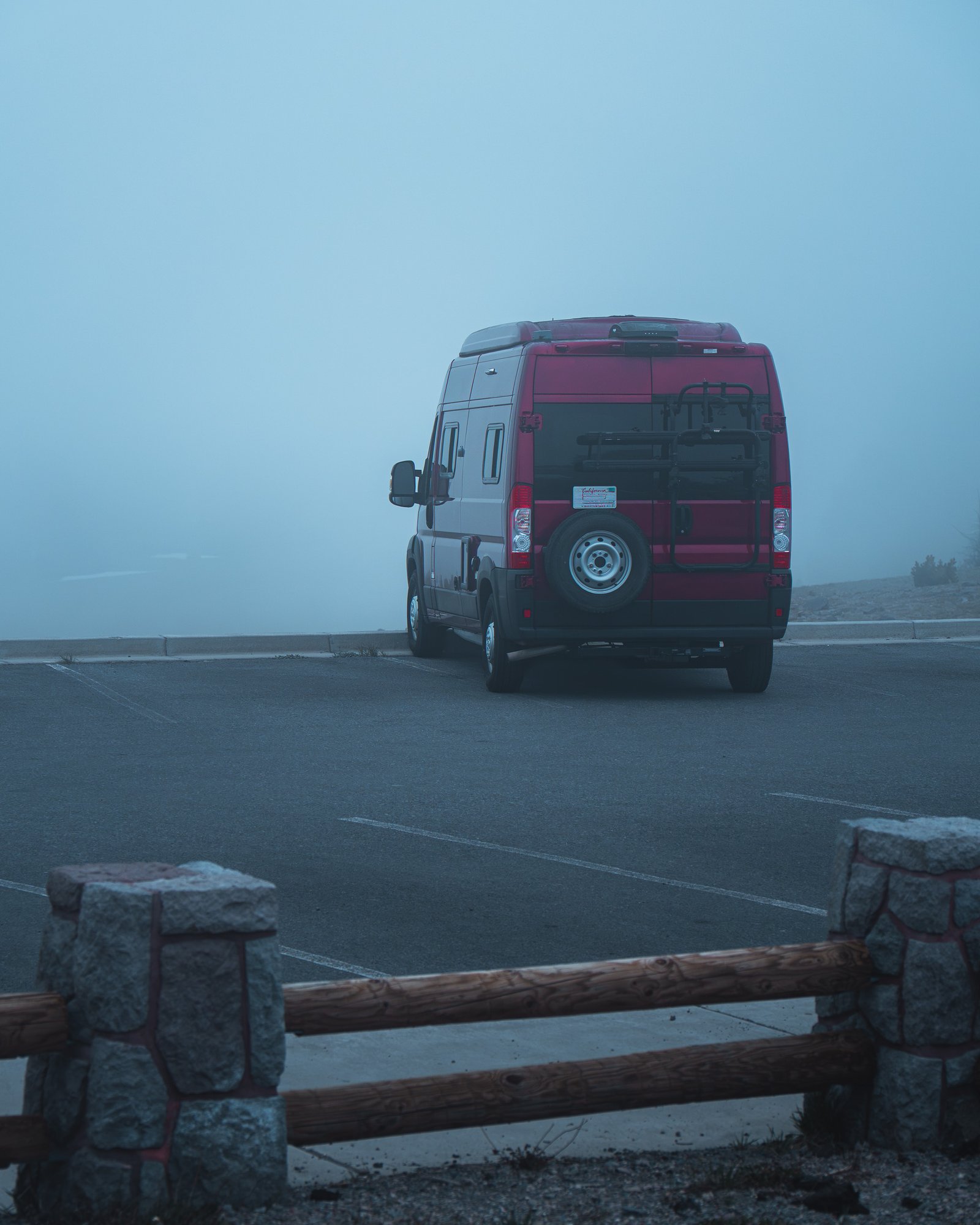
This is probably the most important practical tip in this entire guide. Before you go, check the National Park Service Current Conditions page. Snow can keep roads closed until early summer, and temporary closures can also happen because of construction, rockfall or wildfires.
We also would not rely blindly on Google Maps when choosing which entrance to use. North Entrance remains closed for much of the year, and the NPS itself warns that some navigation apps may still try to route you through it.
Important for 2026, 2027 and 2028
If you are visiting Crater Lake during these years, there is one important change compared with many older guides that you may still find online.
Cleetwood Cove Trail, the only public access to the lakeshore, will remain closed during the 2026, 2027 and 2028 seasons because of major rehabilitation work.
As a result, there will also be no boat tours, and it will not be possible to reach the shore for swimming or fishing while the work is underway. Access is currently expected to reopen in 2029.
In addition, during 2026, construction on East Rim Drive is causing partial closures that affect access to places including Sun Notch and Vidae Falls. Because these conditions can change, we would always check the latest updates a few days before your visit.
Park entrance
At the moment, you do not need to reserve a timed entry slot to enter Crater Lake National Park. You do, however, need to pay the entrance fee or have a valid National Park Service pass. The standard pass for a private vehicle during the summer season currently costs $30 and is valid for seven days. Here is the official page where you can check current prices or buy your pass online if you prefer.
If you are visiting several National Parks during your trip, it may be worth using the America the Beautiful Pass instead of paying each entrance fee separately.
Gas
We would enter the park with plenty of fuel. There is a seasonal gas station in Mazama Village, but we would not rely on it as your only option, especially outside the main summer months.
The National Park Service itself recommends filling up before entering the park.
Cell service and maps
Cell service inside Crater Lake is quite limited. There are no cell towers inside the park, and reception is inconsistent around Rim Village and some viewpoints.
Before arriving, we would download offline Google Maps, the park map and any hiking routes you are planning to do. This is especially important if you are exploring the park by camper van or plan to go hiking.
Water, sun and elevation
Even though the hikes in Crater Lake are not especially long, remember that much of the park sits above 2,000 meters of elevation.
The air is also quite dry and it can be windy, so it is easy to drink less water than you actually need. You will not find drinking water consistently along Rim Drive either. For any hike, we would carry enough water, sun protection and an extra layer even in summer.
We use Yeti bottles, which are insulated and do a great job of keeping drinks cold or hot.
Our opinion of Crater Lake
Crater Lake was our first National Park in the United States, and maybe that is why it will always feel a little more special to us. But even putting that aside, we still think it is absolutely worth visiting.
It is not a huge park and you do not need a week to explore it. But that is partly what makes it so appealing. In one or two days you can drive around much of the lake, discover very different landscapes, do a couple of hikes and enjoy some incredible views.
And although Crater Lake is undeniably the main attraction, we liked discovering that the park has much more to offer. Pumice Desert, the forests, the wildlife and the hiking trails made the visit much more varied than we expected.
If you are planning an Oregon road trip or traveling from California toward Portland or Seattle, we would definitely make room to visit Crater Lake National Park.
We hope you enjoyed this guide and, most importantly, that it helps you plan your visit. If you have any questions or want to add anything, we will be reading the comments.
If you travel by camper van and, like us, happen to have your cat along for the ride, you may also be interested in our post on how to travel in a camper van with your cat in summer.
See you on the road!